
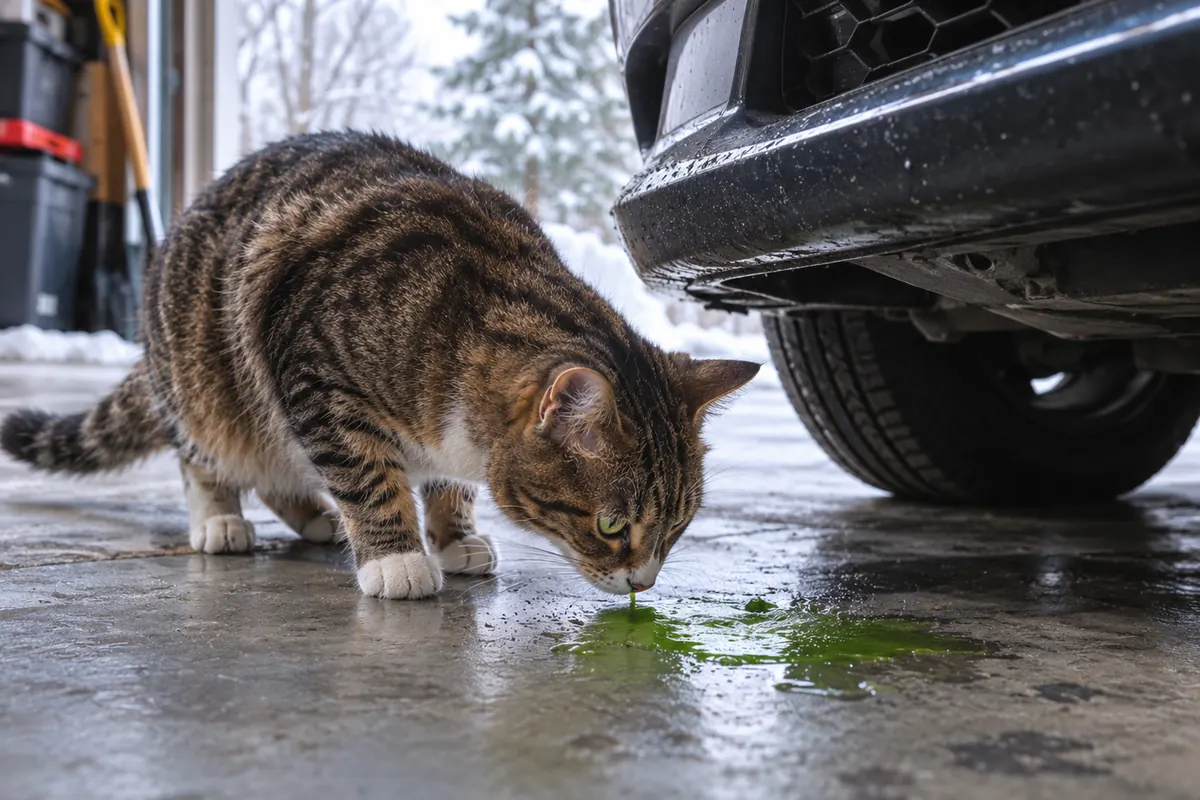
Short answer: Antifreeze is an emergency. Most car antifreeze contains ethylene glycol, which tastes sweet and is extremely toxic: Pet Poison Helpline says as little as 1 teaspoon can kill a cat and 1 to 2 tablespoons can kill a dog, depending on size. Treatment works best within hours: within about 3 hours for cats and 8 to 12 hours for dogs. If you think your pet licked or drank antifreeze, go to a vet now. Don’t wait for signs.
Why antifreeze is so dangerous
Radiator coolant is usually 95 to 100% ethylene glycol. It has a sweet taste, so pets will lap up puddles and drips. The body breaks it down into compounds that cause severe, often fatal, kidney failure. The Merck Veterinary Manual says the outlook is poor once severe kidney failure has developed, so speed matters more than anything.
Where pets find ethylene glycol
- Car radiator coolant, and drips or puddles under cars
- Some brake and transmission fluids and windshield de-icers
- Antifreeze added to toilets in cabins over winter
- Some imported snow globes, which can break and leak
- Some paints, solvents, wood stains and photo-developing chemicals
Signs and timeline
Pet Poison Helpline describes three stages:
| Stage | When | What you may see |
|---|---|---|
| 1. Looks “drunk” | 30 minutes to 12 hours | Stumbling, drooling, vomiting, seizures, heavy thirst and peeing |
| 2. Seems better | 12 to 24 hours | Signs seem to improve, but damage continues. Fast heartbeat, fast breathing, dehydration |
| 3. Kidney failure | Cats: 12 to 24 hours. Dogs: 36 to 72 hours | Severe lethargy, not eating, vomiting, drooling, seizures, coma |
Stage 2 is the trap. A pet that seems to recover can still be getting worse inside. The Merck Veterinary Manual notes dogs may seem to briefly recover about 12 hours after drinking it.
Treatment
There are antidotes, but they only work before the kidneys fail:
- Cats: must be treated within about 3 hours of drinking antifreeze.
- Dogs: must be treated within about 8 to 12 hours.
At the clinic, your vet may test the blood for ethylene glycol, give an antidote (fomepizole or ethanol), and give IV fluids. Pet Poison Helpline says delayed treatment is often ineffective and the prognosis is poor once kidney failure develops.
What to do now: go to your vet or an emergency clinic. Call ahead, or call the ASPCA Animal Poison Control Center at (888) 426-4435 or Pet Poison Helpline at (855) 764-7661 (a fee may apply). Don’t make your pet vomit at home unless a vet tells you to.
How to prevent antifreeze poisoning
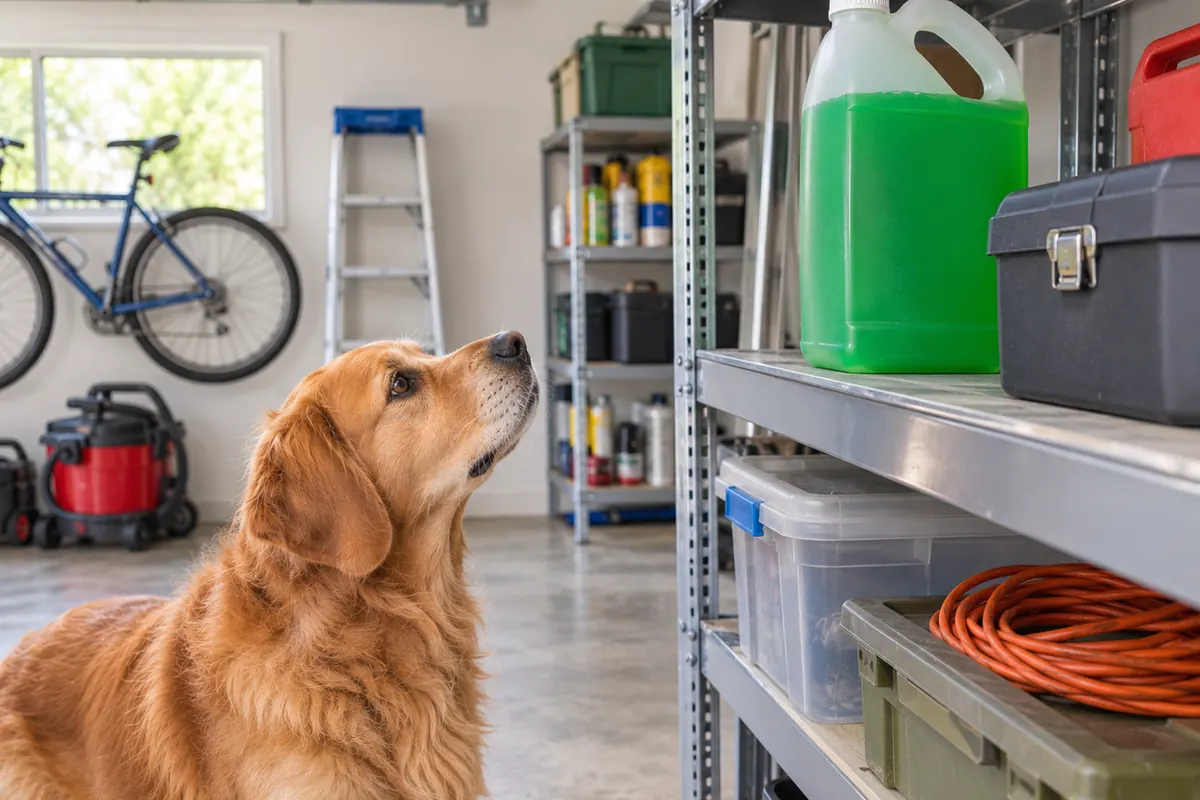
- Store it high and closed, and throw away old containers.
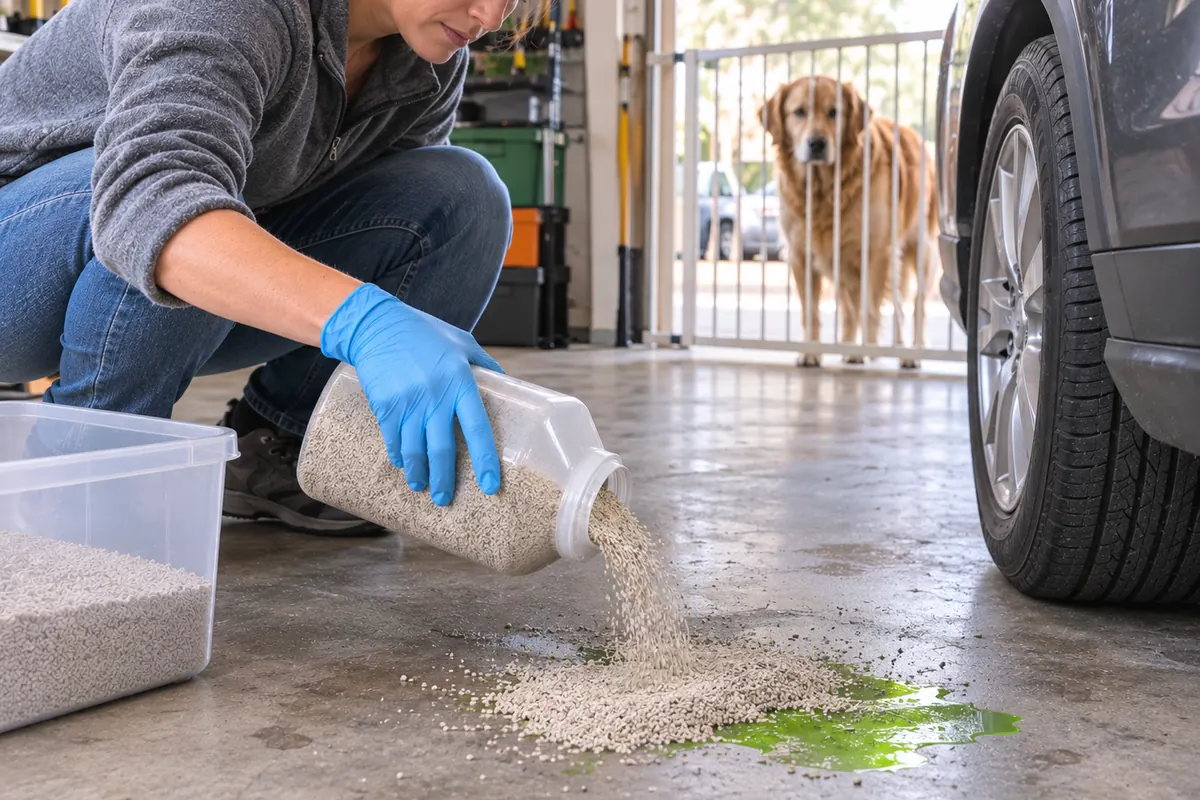
- Clean up spills and leaks right away. The Merck Veterinary Manual suggests covering the spot with absorbent material like cat litter or sawdust, then removing it.
- Check under your car for drips, especially in winter.
- Choose propylene glycol antifreeze. Merck notes it is less toxic and doesn’t have the sweet taste that attracts animals.
- Keep pets off driveways, streets and garages where coolant may drip.
- Keep snow globes out of reach, and clean up broken ones carefully.
For other winter and holiday risks, see Christmas pet safety, and learn the general signs of poisoning in dogs and cats.
Sources
- Pet Poison Helpline: Antifreeze Poisoning in Dogs and Cats
- Merck Veterinary Manual: Ethylene Glycol (Antifreeze) Poisoning
- AVMA: First aid tips for pet owners
Last checked: November 15, 2026. General information, not veterinary advice.
Frequently asked questions
How much antifreeze is toxic to a cat?
As little as 1 teaspoon of ethylene glycol antifreeze can be fatal to a cat, according to Pet Poison Helpline.
How much antifreeze is toxic to a dog?
As little as 1 to 2 tablespoons can be fatal to a dog, depending on its size.
How quickly do signs of antifreeze poisoning appear?
Signs that look like being drunk can start within 30 minutes to 12 hours. Kidney failure follows 12 to 24 hours later in cats and 36 to 72 hours later in dogs.
Can a dog or cat survive antifreeze poisoning?
Yes, if treated early. The antidote works best within about 3 hours for cats and 8 to 12 hours for dogs. Once kidney failure develops, the outlook is poor.
Is propylene glycol antifreeze safe for pets?
It is much less toxic than ethylene glycol and lacks the sweet taste, but it is still a chemical. Store it out of reach and clean spills.