
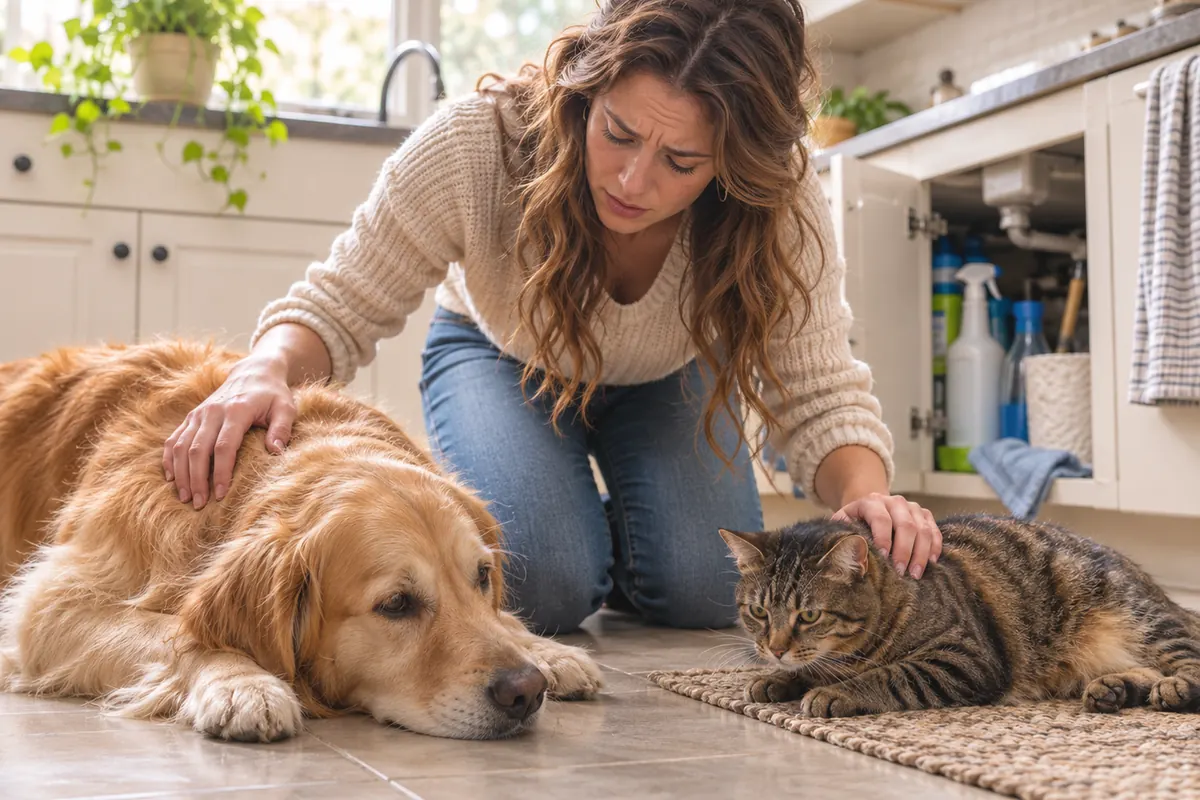
Short answer: Common signs of poisoning in dogs and cats include vomiting, diarrhea, drooling, loss of appetite, stumbling, tremors, seizures, a racing or slow heartbeat, pale or yellow gums and trouble breathing. But many poisons cause no signs at first. If you know or suspect your pet ate something toxic, call your vet or a pet poison hotline right away, even if your pet seems fine.
Go to the vet now if your pet:
- is having a seizure
- has trouble breathing
- is unconscious or not responding to you
- is bleeding
The ASPCA and Pet Poison Helpline both say these need immediate veterinary care. Call the clinic on the way so they can get ready.
Signs of poisoning, by body system
Pet Poison Helpline groups the warning signs like this. The signs depend on the poison, so your pet may show only one or two.
| Body system | Signs to watch for |
|---|---|
| Stomach and gut | Nausea, drooling, vomiting, diarrhea, not eating |
| Heart and circulation | Racing or slow heartbeat, pale gums, weakness, lethargy, collapse |
| Brain and nerves | Confusion, unusual pupil size, stumbling, tremors, seizures |
| Breathing | Fast, shallow or labored breathing, wheezing |
| Kidneys | Drinking or peeing much more, peeing little or not at all, not eating, vomiting |
| Liver | Yellow gums, skin or eyes, weakness, dullness, vomiting, black tarry stools |
| Internal bleeding | Coughing or vomiting blood, pale gums |
Also watch for behavior changes: unusual hyperactivity, agitation, hiding or being much quieter than normal.
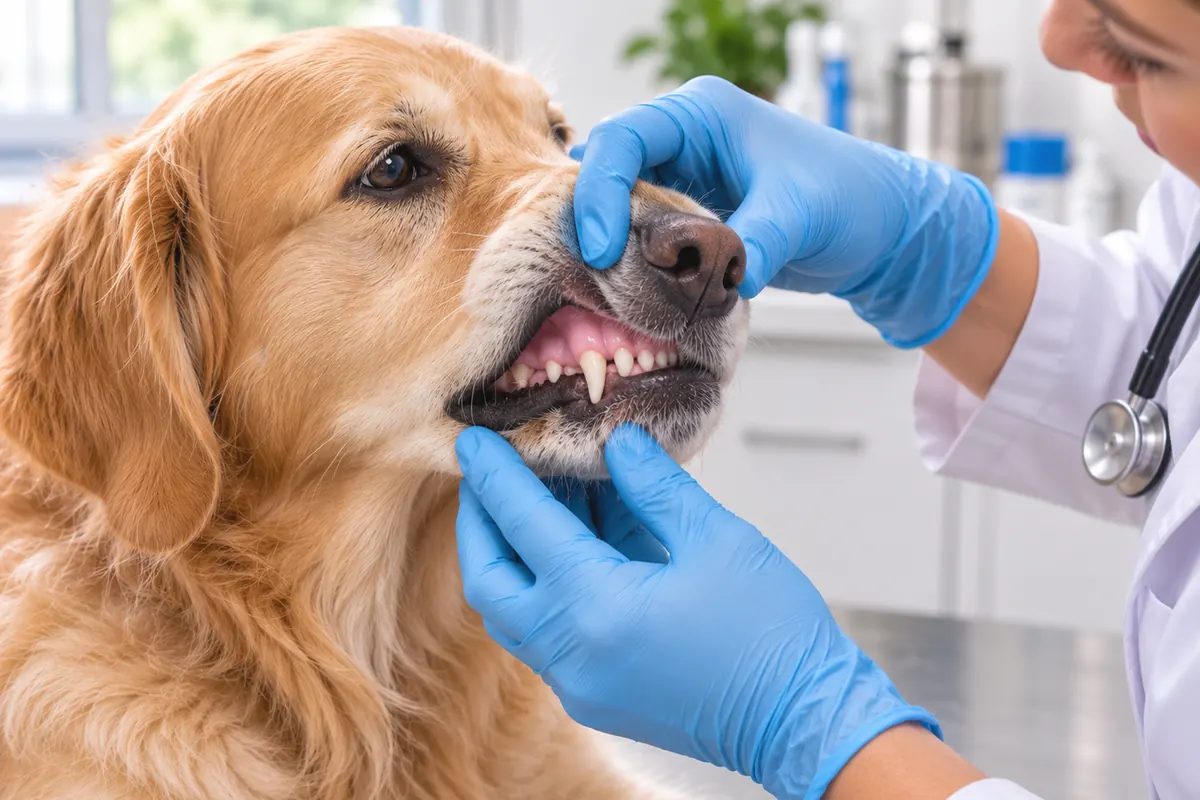
Why “my pet seems fine” is not enough
Many toxins have delayed effects. Antifreeze can cause kidney failure one to three days later, and grapes, lilies and some medications can also damage organs before you see much. By the time signs appear, the poison can be harder to remove and treat. That is why the ASPCA says not to wait for signs before calling.
What to do first
- Move your pet away from the substance so they can’t get more. Check other pets in the home too.
- Check how your pet is doing. If you see any of the emergency signs above, go straight to a vet.
- Keep the evidence: the package, label, pill bottle or plant. If your pet vomited, the AVMA suggests collecting a sample in a sealable plastic bag.
- Call your vet, an emergency clinic or a pet poison hotline right away:
- ASPCA Animal Poison Control Center: (888) 426-4435
- Pet Poison Helpline: (855) 764-7661
- A fee may apply.
What to have ready when you call
- Your pet’s species, breed, age, weight and any health problems
- What they got into, how much, and how long ago
- The symptoms you have seen
- The product package or label
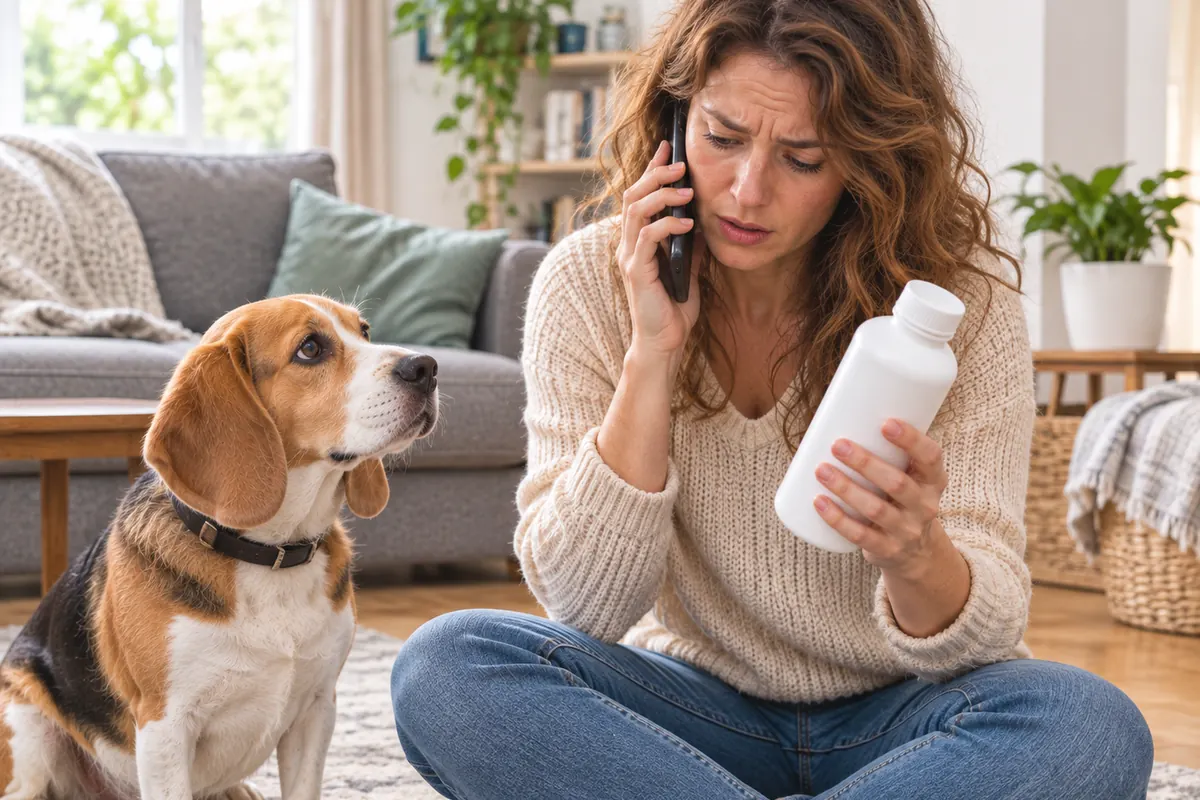
What not to do
- Don’t make your pet vomit unless a vet or poison control tells you to. It isn’t always safe, and it depends on what was eaten.
- Never give hydrogen peroxide to a cat. Pet Poison Helpline warns against it.
- Don’t give milk, oil, food or home remedies before speaking to a professional. The ASPCA advises not giving your pet anything before you get advice.
- Don’t rely on internet tips in place of a call.
If it got on the skin or in the eyes
The AVMA says to follow the product label’s instructions for people. If the label says to wash with soap and water, wash your pet’s skin, keeping soap out of the eyes, nose and mouth. If it says to flush skin or eyes with water, do that as soon as safely possible, then call your vet.
Common poisons to keep out of reach
- Human medications: the ASPCA’s list of the deadliest pet toxins includes ADHD and weight-loss drugs, blood pressure pills, muscle relaxers like baclofen and some seizure medications.
- Foods: chocolate, grapes and raisins, onions and garlic, and xylitol. See our toxic foods for dogs list.
- Plants: lilies are extremely dangerous for cats. See plants toxic to pets.
- Garage and garden: antifreeze, slug and snail bait, insecticides and rodent bait.
Related guides: my dog ate chocolate, xylitol poisoning in dogs, are lilies poisonous to cats? and antifreeze poisoning in dogs and cats.
Sources
- ASPCA: What to Do if Your Pet Is Poisoned
- ASPCA: My Pet Ate Something! When Should I Seek Help?
- ASPCA: The Top 10 Deadliest Pet Toxins
- Pet Poison Helpline: Triaging a Potentially Poisoned Pet
- AVMA: First aid tips for pet owners
Last checked: November 15, 2026. General information, not veterinary advice.
Frequently asked questions
What are the first signs of poisoning in a dog?
Often vomiting, diarrhea, drooling or not eating. Depending on the poison, you may also see stumbling, tremors, a racing heartbeat, pale gums or seizures. Some poisons cause no signs for hours or days.
How long does it take for signs of poisoning to show in pets?
It depends on the poison. Some act within minutes, others take hours or days. Antifreeze, for example, can cause kidney failure 12 to 72 hours later. Don’t wait for signs before calling.
Should I make my dog throw up if they ate something poisonous?
Not unless a vet or poison control tells you to. Making a pet vomit isn’t always safe, and it depends on what was eaten. Never give hydrogen peroxide to a cat.
Can I give my pet milk after they eat something toxic?
Don’t give milk, food or any home remedy before speaking to a vet or poison control. Call first.
Who do I call if my pet is poisoned?
Your vet or an emergency clinic, the ASPCA Animal Poison Control Center at (888) 426-4435, or Pet Poison Helpline at (855) 764-7661. A fee may apply.