
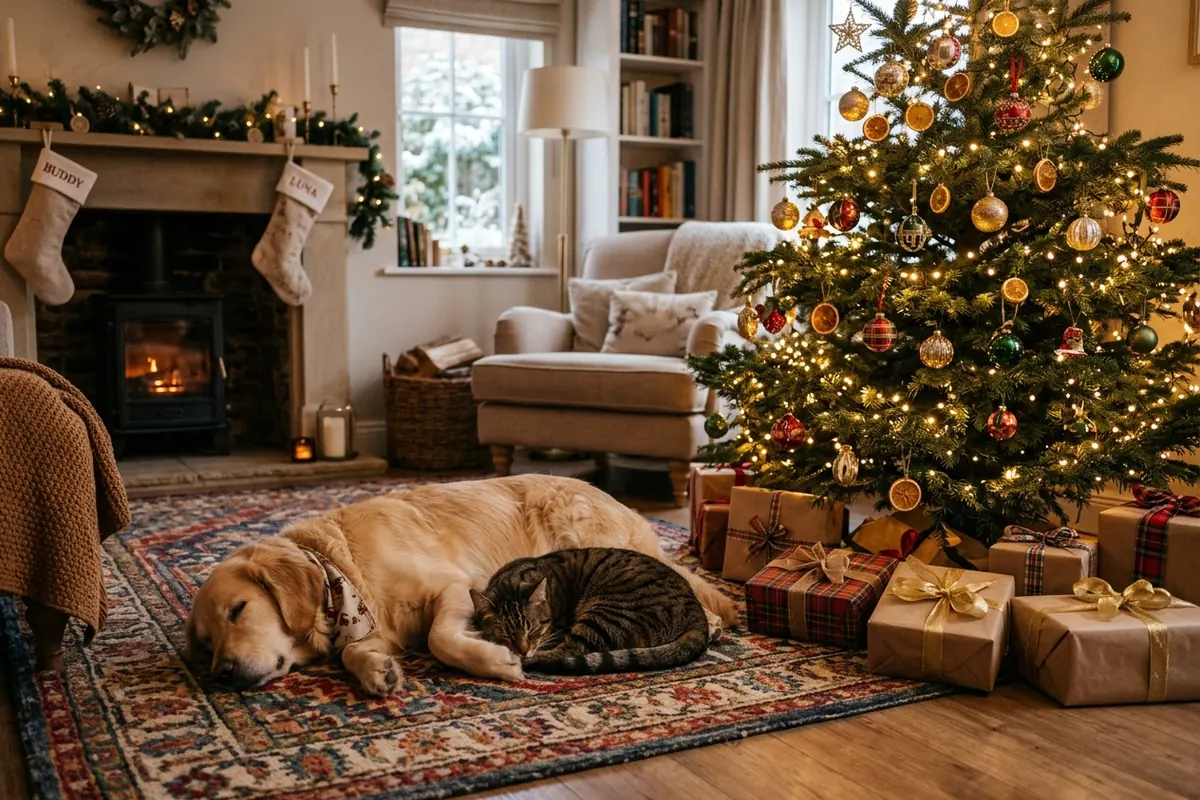
Short answer: The biggest Christmas dangers for dogs and cats are food (chocolate, grapes and raisins in fruitcake, fatty leftovers, bones, alcohol), decorations (tinsel, ornaments, light wires, snow globes, salt-dough ornaments) and some holiday plants (lilies for cats, mistletoe, holly). Keep them out of reach and save the ASPCA Poison Control number: (888) 426-4435.
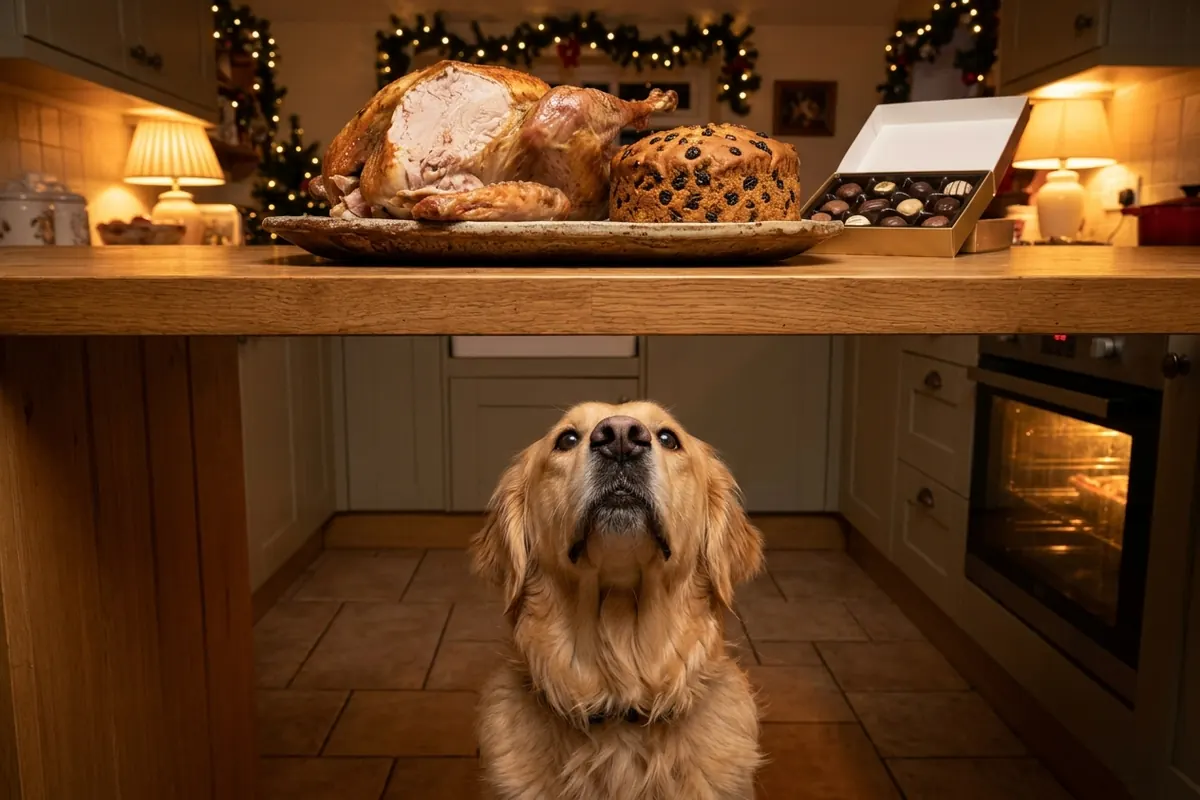
Christmas foods your pet should not eat
- Chocolate: even small amounts can cause serious problems, the AKC says. See my dog ate chocolate: what to do and our chocolate toxicity calculator.
- Grapes and raisins, including fruitcake and mince pies: can seriously damage a dog’s kidneys, even in small doses. See can dogs eat grapes?
- Fatty, sweet or spicy leftovers: the ASPCA warns they can be dangerous to pets, and rich table scraps upset stomachs.
- Cooked bones from the turkey, chicken or ham: can splinter. See what to do if your dog ate chicken bones.
- Alcohol: don’t leave drinks where pets can reach them.
- Sugar-free sweets and baking: may contain xylitol. See xylitol poisoning in dogs.
Keep edible gifts and treats off the floor and out from under the tree, and practice the “leave it” cue before the holidays, as the AKC suggests.
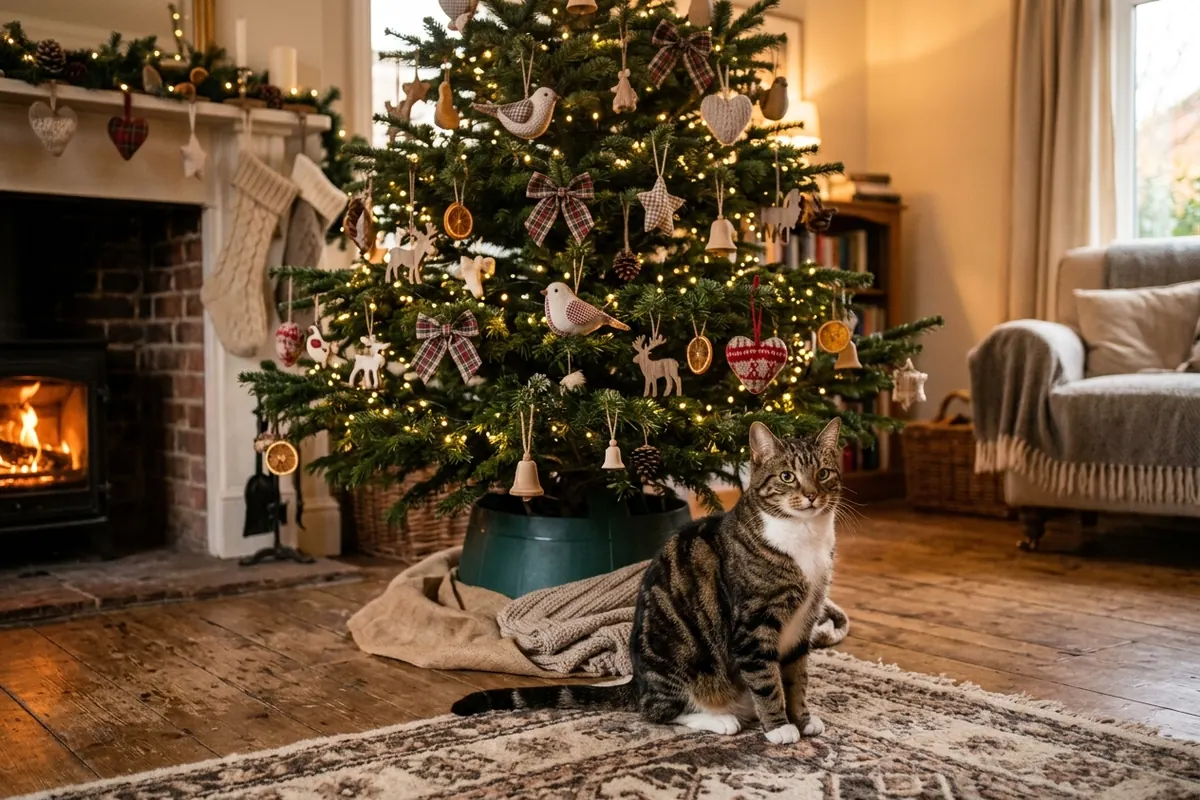
Christmas tree and decoration hazards
| Hazard | Why it’s a problem |
|---|---|
| Unsecured tree | Can tip over and hurt pets. Anchor it securely. |
| Tree water | Can grow bacteria that cause nausea, vomiting or diarrhea. Cover it. |
| Tinsel | Especially tempting to cats. Can cause severe vomiting, intestinal blockage and dehydration, and may need surgery. |
| Glass or plastic ornaments | Can cut the mouth and digestive tract, and are a choking hazard. |
| Light strings and wires | A chewed wire can deliver a potentially lethal electric shock. Punctured batteries can burn the mouth. |
| Candles | Pets can knock them over and cause burns or a fire. |
| Snow globes | Some contain ethylene glycol (antifreeze), which is highly toxic. |
| Salt-dough ornaments and ice melt | Can cause life-threatening electrolyte imbalances, even when dry. |
Holiday plants: which are dangerous?
| Plant | Risk |
|---|---|
| Lilies | Highly toxic to cats: can cause kidney failure. Keep them out of the house. |
| Mistletoe and holly | Can cause stomach upset and heart problems. |
| Poinsettia | Mild to moderate stomach irritation; toxicity is generally overrated. |
| Christmas cactus | Non-toxic to dogs and cats. A safer choice. |
See our full lists of plants toxic to cats and plants safe for cats.
Guests, noise and New Year’s Eve
- Medication: ask guests to keep medicine in a closed cabinet, not a bag or suitcase.
- Noise: loud music, fireworks, poppers and noisemakers can scare pets. Give them a quiet room or crate with a chew toy.
- Confetti and string: strings can lodge in a cat’s intestines.
- Trash: wrapping, food scraps and broken decorations attract pets. Empty the bins often.
- Routine: the AKC suggests keeping walks, meals and play as consistent as possible during the holidays.
If your pet eats something dangerous
Call your vet or an emergency clinic right away, without waiting for symptoms:
- ASPCA Animal Poison Control Center: (888) 426-4435
- Pet Poison Helpline: (855) 764-7661
A fee may apply.
Sources
- ASPCA: Holiday Safety Tips
- ASPCA: Keep Your Pet Safe from These 10 Holiday Hazards
- AKC: 4 Tips for a Safe and Stress-Free Holiday With Your Dog
Last checked: November 14, 2026. General information, not veterinary advice.
Frequently asked questions
Is a Christmas tree dangerous for dogs and cats?
The tree itself is less of a problem than what comes with it: an unsecured tree can fall, the water can grow bacteria, and tinsel, ornaments and light wires can cause blockages, cuts or electric shocks.
Are poinsettias poisonous to cats and dogs?
Poinsettias cause mild to moderate stomach irritation. The ASPCA says their toxicity is generally overrated, but keep them out of reach.
Can dogs eat Christmas ham?
It’s best not to. Ham is high in salt and fat, and cooked bones can splinter.
Why is tinsel dangerous for cats?
Cats are drawn to tinsel, and swallowing it can cause severe vomiting, an intestinal blockage and dehydration that may need surgery.
What should I do if my pet ate something toxic at Christmas?
Call your vet or the ASPCA Animal Poison Control Center at (888) 426-4435 right away, even if your pet seems fine.