
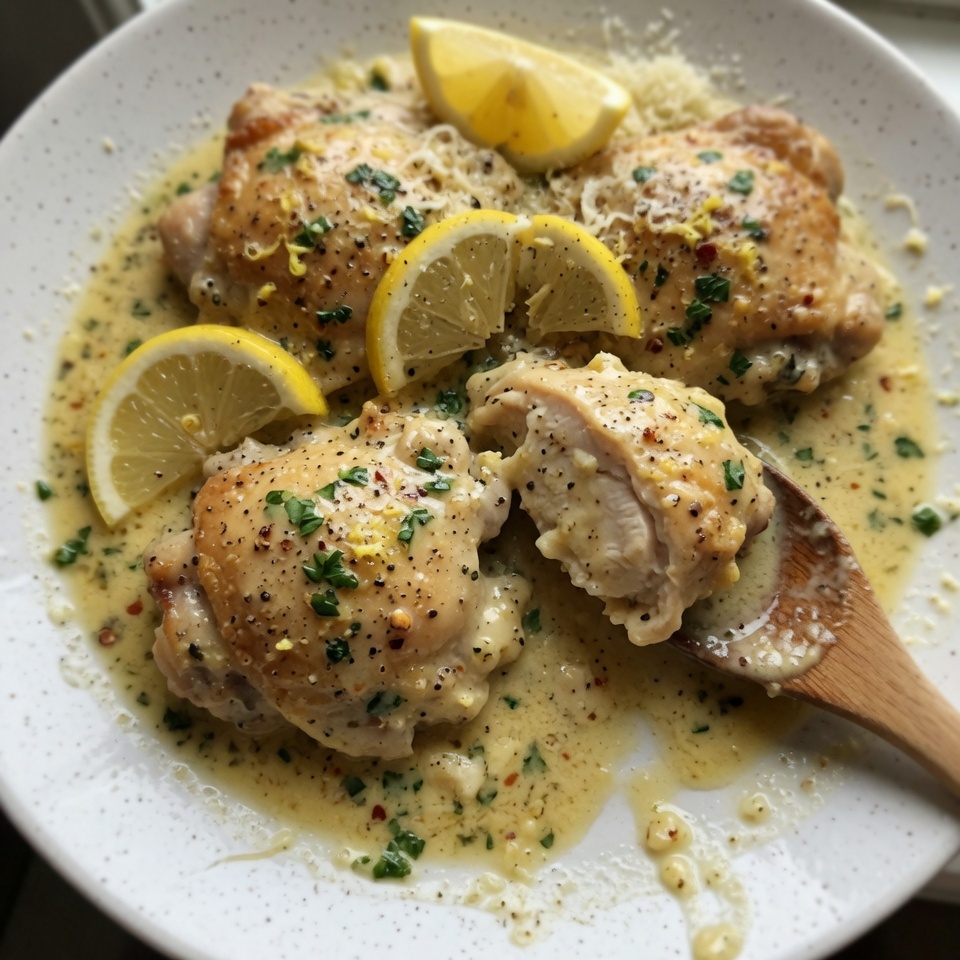
Golden, crispy-skinned chicken thighs swim in a velvety lemon-garlic cream sauce — weeknight comfort food that feels almost too easy for how good it tastes.
📋 In This Article
Introduction
Let’s be honest: weeknight cooking usually means compromise. You want something that actually tastes like you tried, but you’re also trying to get food on the table before everyone loses their minds. This Speedy Creamy Lemon Garlic Chicken Thighs recipe is that rare bird — a dish that delivers big, restaurant-level flavor without the time commitment. The sauce comes together in the same pan you sear the chicken in, which means you’re building layers of flavor while saving yourself from a sink full of dishes.
Chicken thighs are the unsung hero here. Unlike breasts, which seem determined to dry out the moment you look away, thighs stay juicy and forgiving. They braise in the cream sauce, soaking up the lemon and garlic while the skin stays crisp above the liquid line. The whole thing clocks in under 30 minutes, and most of that is hands-off simmering time.
Why This Recipe Works
The magic starts with the sear. When chicken thighs hit a hot pan, the Maillard reaction kicks in — that’s the browning process that creates hundreds of new flavor compounds on the surface. Those browned bits stuck to the pan? That’s fond, and it’s pure concentrated flavor. Most people wash it away. We’re going to deglaze it into the sauce.
Here’s what makes the sauce work: heavy cream contains enough fat to emulsify with the lemon juice without breaking. The acidity brightens what could otherwise feel heavy, and the garlic mellows as it simmers, losing its raw bite. The result is a velvety, silky sauce that clings to the chicken without needing a roux or cornstarch slurry.
Ingredients You’ll Need
For the Chicken
- 2 pounds bone-in, skin-on chicken thighs (richer flavor, crispy skin potential) or 1.5 pounds boneless, skinless chicken thighs (faster cooking, less mess)
- 1/2 teaspoon kosher salt (plus more for seasoning)
- 1/4 teaspoon freshly ground black pepper
- 1 tablespoon olive oil
For the Lemon Garlic Sauce
- 3 tablespoons unsalted butter
- 4 cloves garlic, minced (don’t be shy here — fresh matters)
- 1 cup heavy cream (the fat content matters for emulsification)
- 1/2 cup low-sodium chicken broth
- 1 medium lemon, juiced (about 3 tablespoons) plus 1 teaspoon zest
- 1/2 teaspoon red pepper flakes (optional, but adds nice warmth)
- 2 tablespoons fresh parsley, chopped
- 1 tablespoon fresh chives, chopped
Step-by-Step Instructions
Step 1: Prep and Season the Chicken
Pat the chicken thighs completely dry with paper towels. I mean it — moisture is the enemy of crispy skin. Season both sides generously with salt and pepper. If you have time, let them sit at room temperature for 15-20 minutes before cooking. This helps them cook more evenly.
Step 2: Sear the Chicken
Heat the olive oil in a large, deep skillet over medium-high heat until it shimmers. Add the chicken thighs skin-side down. Don’t crowd the pan; do two batches if needed. Crowding drops the pan temperature and you’ll end up steaming the meat instead of searing it.
Cook for 7-8 minutes without moving them. I know it’s tempting to peek. Don’t. The skin needs uninterrupted contact with the hot metal to develop that golden-brown crust. Flip and cook another 5 minutes on the other side.
The chicken should register 165°F (74°C) on an instant-read thermometer inserted into the thickest part. Remove from the pan and set aside on a plate.
Step 3: Build the Sauce Base
Reduce the heat to medium. Add the butter to the same pan — yes, with all those browned bits still stuck to the bottom. Once it melts and foams, add the garlic. Sauté for about 30 seconds until fragrant but not browned. Garlic burns fast and turns bitter, so stay close.
Pour in the chicken broth and lemon juice. Use a wooden spoon to scrape up all that fond from the bottom of the pan. This is where a lot of the flavor lives. Let it simmer for 2 minutes to reduce slightly.
Step 4: Finish the Sauce
Stir in the heavy cream and bring to a gentle simmer. Let it cook for 2-3 minutes until it thickens enough to coat the back of a spoon. The sauce won’t be thick like gravy — it should have a pourable, silky consistency.
Return the chicken to the pan, skin-side up. Simmer for 5-7 minutes to let the flavors meld and the chicken finish cooking through. The skin won’t stay perfectly crispy where it touches the sauce, but the exposed parts should stay crisp.
Step 5: Finish and Serve
Remove from heat. Stir in the lemon zest and half the fresh herbs. Taste the sauce and adjust seasoning if needed. Serve the chicken over rice, mashed potatoes, or with crusty bread for sauce-mopping purposes. Sprinkle with remaining herbs.
⚠️ Common Mistakes to Avoid
Overcrowding the pan. This is the number one crime against crispy chicken skin. When too much meat hits the pan at once, the temperature drops, steam builds up, and you get gray, rubbery skin instead of golden and crisp. Work in batches if your skillet isn’t big enough.
Cold cream into a hot pan. Temperature shock can make dairy sauces separate. Let your cream come to room temperature while the chicken cooks, or temper it by adding a small amount of the hot pan liquid to the cream before pouring it all in.
Skipping the fond. Those browned bits stuck to your pan aren’t mess — they’re flavor concentrate. Deglazing with broth and lemon juice dissolves them back into the sauce. The first time I skipped this step, the sauce tasted flat and one-dimensional. Never again.
Under-seasoning. Cream and butter are rich but neutral. They need salt to carry flavor. Taste your sauce before serving and don’t be afraid to add more salt, pepper, or even a tiny splash more lemon juice if it feels heavy.
Flavor Variations & Customizations
Add vegetables. Sauté sliced mushrooms in the pan after removing the chicken, before making the sauce. Or wilt fresh spinach into the finished sauce right before serving. Cherry tomatoes halved and added with the cream burst and add sweetness.
Make it dairy-free. Coconut cream works surprisingly well here — the subtle coconut flavor actually complements the lemon. Cashew cream is another option if you want a more neutral flavor profile.
Switch up the herbs. Fresh thyme or dill can replace or complement the parsley. Dill especially loves lemon. A teaspoon of dried oregano or herbes de Provence adds Mediterranean depth.
Add heat. A teaspoon of Dijon mustard whisked into the cream adds a subtle kick and helps emulsify the sauce. Smoked paprika sprinkled over the chicken before searing gives it a slightly smoky edge.
Perfect Pairings: What to Serve With
The sauce is the star here, so you want sides that know their job: soaking it up.
Rice is the obvious choice — long-grain white rice or jasmine works perfectly. The grains separate and catch every drop.
Mashed potatoes create a creamy-on-creamy situation that’s deeply comforting. Keep them relatively plain so the lemon-garlic sauce can shine.
Crusty bread is the low-effort, high-reward option. A baguette or sourdough loaf torn into chunks lets people eat with their hands and ensures no sauce goes to waste.
Simple green vegetables balance the richness. Steamed green beans, roasted asparagus, or a quick side salad with vinaigrette cuts through the cream.
Storage & Reheating Tips
Store leftover chicken and sauce together in an airtight container in the refrigerator for up to 3 days. The skin will soften, but the flavor actually improves after a day.
For reheating, skip the microwave if possible. Place the chicken in a skillet over medium-low heat with a tablespoon of water or broth. Cover and heat gently until warmed through. This prevents the sauce from breaking and keeps the chicken tender.
If you must microwave, do it in 30-second intervals at 50% power, stirring the sauce between intervals.
Freezing works, but cream sauces can separate upon thawing. If you plan to freeze, consider making the sauce slightly thinner than usual. Reheat slowly and whisk vigorously to bring it back together.
💡 Pro Tips for Success
Dry chicken = crispy skin. I mentioned this, but it bears repeating. Use paper towels and really press down. Water on the surface turns to steam, and steam kills crispiness.
Use a thermometer. Visual cues work, but an instant-read thermometer removes the guesswork. Pull the chicken at 165°F and let it rest — carryover cooking will push it a few degrees higher while the juices redistribute.
Room temperature cream. Take the cream out of the fridge when you start cooking. Cold dairy into hot liquid can curdle. Room temperature cream incorporates smoothly.
Don’t skip the lemon zest. The juice adds acid, but the zest contains the aromatic oils that make lemon taste intensely lemony. Add it at the very end so the heat doesn’t cook off those volatile oils.
Let it rest. After cooking, give the chicken 5 minutes before serving. The muscle fibers relax and reabsorb juices that were pushed toward the center by the heat. Cut too early and that liquid ends up on your cutting board instead of in the meat.
Frequently Asked Questions (FAQ)
+Why did my cream sauce separate?
Cream sauces break when they get too hot or when cold dairy hits a hot pan too quickly. Keep the heat at a gentle simmer — not a rolling boil — and let your cream come to room temperature before adding it. If it does separate, remove it from heat and whisk vigorously. Sometimes a splash of cold cream whisked in can bring it back together.
+Can I use chicken breasts instead of thighs?
You can, but you’ll need to adjust the cooking time. Boneless, skinless chicken breasts cook faster and dry out more easily. Pound them to even thickness and check for doneness at the 4-5 minute mark per side. The sauce will still work beautifully.
+How do I know when chicken thighs are fully cooked?
The most reliable method is an instant-read thermometer inserted into the thickest part of the meat (not touching the bone). It should read 165°F (74°C). If you don’t have a thermometer, the juices should run clear when you cut into the thickest part, and the meat should feel firm, not squishy.
+Can I make this ahead of time?
You can sear the chicken up to a day ahead and store it in the refrigerator. Make the sauce fresh when you’re ready to serve. The fully assembled dish reheats well, though the skin will lose some crispiness.
+What can I substitute for heavy cream?
Half-and-half works but produces a thinner sauce. For a lighter version, use whole milk mixed with a teaspoon of flour or cornstarch. Coconut cream or cashew cream are good dairy-free alternatives that maintain the creamy texture.
+How long do leftovers last?
Store in an airtight container in the refrigerator for up to 3 days. The sauce may thicken as it sits — add a splash of broth or water when reheating to loosen it back up.
+Can I freeze this dish?
Yes, though cream-based sauces can sometimes separate after freezing and thawing. Cool completely before freezing in an airtight container for up to 3 months. Thaw overnight in the refrigerator and reheat gently on the stovetop, whisking to re-emulsify the sauce if needed.

Easy, Creamy Lemon Garlic Skillet Chicken
Ingredients
- 4 boneless, skinless chicken breasts (about 2 pounds total), pounded to 1/2-inch thickness
- 1/2 teaspoon kosher salt, plus more for seasoning
- 1/4 teaspoon freshly ground black pepper, plus more for seasoning
- 1 tablespoon olive oil
- 3 tablespoons unsalted butter
- 1 small shallot, finely chopped
- 4 cloves garlic, minced
- 2 tablespoons all-purpose flour
- 1 cup half-and-half or whole milk
- 1/2 cup low-sodium chicken broth
- Juice of 1 medium lemon (about 3 tablespoons)
- 2 tablespoons chopped fresh parsley leaves
- 1 small lemon, thinly sliced
Instructions
- Thoroughly dry the chicken with paper towels. Generously season all over with salt and pepper.
- Heat the oil in a 10-inch or larger skillet over medium-high until shimmering. Working in batches if needed, add the chicken and sear until deeply browned on the bottom, 6 to 7 minutes. Flip with tongs and sear the other side until browned, 6 to 7 minutes. Transfer the chicken to a plate; set aside.
- Reduce the heat to medium and add the butter. When melted, add the shallot, garlic, 1/2 teaspoon salt, and 1/4 teaspoon pepper and cook, stirring occasionally, until just starting to soften, about 1 minute. Add the flour, stir to evenly coat the shallots and garlic, and cook for 1 minute more.
- Stir in the half-and-half or milk and broth until no lumps from the flour remain, making sure to scrape up any browned bits from the bottom of the pan. Bring to a boil. Reduce the heat to a simmer. Return the chicken to the pan and simmer until the sauce is thickened enough that it coats the back of a spoon and the chicken is cooked through, 3 to 4 minutes. Stir the lemon juice into the sauce. Garnish with the parsley and lemon slices and serve immediately.
- Recipe Notes
Notes
- To ensure your chicken is perfectly cooked, aim for an internal temperature of 165°F; the outside should be golden brown and the juices should run clear.
- Prevent the sauce from breaking by adding the lemon juice at the end of cooking; this helps maintain its creamy texture.
- If you're out of half-and-half, you can substitute with equal parts whole milk and heavy cream for a rich flavor.
- For a quick meal prep, season the chicken and store it in the refrigerator for up to 24 hours before cooking to enhance the flavor.
- Leftovers can be stored in an airtight container in the fridge for up to 3 days; reheat gently on the stove over low heat to keep the sauce creamy.