
Juicy seared chicken and burst-sweet tomatoes tangled in a velvety basil-cream sauce. A 20-minute weeknight win.
📋 In This Article
Introduction
Weeknight dinners usually demand compromise—you either sacrifice flavor for speed or spend an hour scrubbing pans. Creamy Chicken Pesto Pasta with Blistered Tomatoes breaks that cycle. It’s a dish that feels like it came from a restaurant kitchen, yet it hits the table in about 20 minutes. The magic lies in the layers: we’re talking golden, seared chicken, sweet burst tomatoes, and a sauce that clings to every ridge of the pasta. It’s rich, sure, but the acidity from the tomatoes cuts right through the heaviness.
Why This Recipe Works
Most Creamy Chicken Pesto Pasta recipes fall flat because they treat the sauce as an afterthought. We found that building the base in the same pan used for the chicken captures the fond—those browned bits stuck to the bottom—which adds a savory depth you can’t get from a jar. We also use heavy cream to stabilize the pesto. Pesto alone tends to separate and get oily when heated; the dairy fat emulsifies with the basil oil, creating a velvety texture that refuses to break.
Here’s the science: Blistering cherry tomatoes isn’t just about color. High heat causes the water inside to turn to steam, bursting the skins and concentrating the natural sugars through caramelization. It balances the rich cream with a sharp, sweet acidity.
Ingredients You’ll Need
To pull this off, you need ingredients that pull their weight.
- Pasta: 8 ounces of penne or fusilli. The ridges grab onto the sauce.
- Chicken Breast: 1 pound boneless, skinless, cut into 1-inch pieces.
- Pesto: 1/2 cup. Homemade is great, but a high-quality store-bought version works wonders.
- Heavy Cream: 1/2 cup. Don’t sub with milk or the sauce will be too thin.
- Cherry Tomatoes: 1 cup. You want them bright red and firm.
- Olive Oil: 2 tablespoons, plus a splash more for the tomatoes.
- Garlic: 2 cloves, minced.
- Parmesan Cheese: 1/4 cup grated, plus more for serving.
- Seasonings: Kosher salt, black pepper, and 1/2 teaspoon red pepper flakes.
Step-by-Step Instructions
Step 1: Prep and Season
Get your chicken breast pieces onto a plate. Pat them dry—moisture is the enemy of browning. Season generously with salt, pepper, and the red pepper flakes.
Step 2: Sear the Chicken
Heat the olive oil in a large skillet over medium-high heat until it shimmers. Add the chicken in a single layer. Don’t crowd the pan; work in batches if needed. Cook for 3-4 minutes per side until golden brown. We are looking for a deep Maillard reaction here—flavor development happens on the surface. Remove chicken and set aside.
Step 3: Blister the Tomatoes
Add the cherry tomatoes to the hot pan. Let them sit undisturbed for 2 minutes. Shake the pan and cook another 2 minutes until skins are wrinkled and charred. This concentrates the umami and sweetness. Remove and set aside with the chicken.
Step 4: Cook the Pasta
While the tomatoes work, boil your pasta in salted water. Cook to al dente. Before draining, reserve 1 cup of that starchy pasta water. This liquid is liquid gold for emulsifying sauces.
Step 5: Build the Sauce
Reduce heat to medium. Add a splash more oil and the garlic. Sauté for 30 seconds—don’t let it burn. Pour in the heavy cream and scrape up the fond from the bottom of the pan. That brown stuff is pure flavor. Stir in the pesto and let it simmer for 2 minutes to thicken slightly.
Step 6: The Marriage
Toss the drained pasta directly into the sauce. Add the chicken and tomatoes back in. If the sauce looks too tight (too thick), pour in that reserved pasta water a splash at a time, tossing constantly. The starch helps the sauce cling to the noodles rather than sliding off.
Step 7: Finish
Kill the heat. Stir in the Parmesan cheese until melted. Taste. Need more salt? Add it. Top with fresh basil.
⚠️ Common Mistakes to Avoid
Even simple dishes have pitfalls. Here is where things usually go wrong.
- Overcooking the Chicken: This is the number one complaint. Since we cut the breast into pieces, they cook fast. Remove them the second they hit 165°F internal. Carryover cooking will finish the job.
- Boiling the Cream: High heat will break the cream emulsion. Keep it at a gentle simmer.
- Skipping the Pasta Water: I used to skip this step—don’t. The starch is essential for a silky, cohesive sauce.
- Not Drying the Chicken: Wet chicken steams instead of searing. Pat it dry for that golden crust.
💡 Pro Tips for the Best Results
Want to elevate this dish? Here are my test kitchen notes.
The Pesto Timing: Add the pesto at the very end of the sauce step. Cooking basil for too long can turn it bitter and brown. We want that fresh, aromatic punch.
Tomato Varieties: If you can find them, mixed medley tomatoes add incredible color contrast. Just ensure they are all similar in size so they cook evenly.
A Human Note: The first time I tested this, I tried to cook the chicken and tomatoes together to save time. Bad idea. The tomatoes released so much water that the chicken stewed in tomato juice instead of searing. It was a gray, flavorless mess. Do them separately. It takes an extra 4 minutes and changes everything.
Recipe Variations and Customizations
This recipe is a template.
- Protein Swap: Shrimp cooks even faster. Add it in the last 2 minutes of searing.
- Vegetarian: Skip the chicken. Use cannellini beans or just double the tomatoes.
- Dairy-Free: Use full-fat coconut milk instead of cream and a vegan pesto.
- Spicy: Add more red pepper flakes or a dollop of calabrian chili paste into the cream sauce.
Serving Suggestions
This dish is a meal on its own, but a few sides round it out.
- Side Salad: A simple arugula salad with lemon juice and shaved parmesan cuts the richness.
- Bread: Crusty garlic bread is non-negotiable for mopping up extra sauce.
- Wine: A crisp Sauvignon Blanc matches the herbal notes in the pesto perfectly.
Storage and Reheating Tips
Leftovers happen.
- Storage: Keep in an airtight container for up to 3 days. The sauce will thicken in the fridge.
- Reheating: Reheat gently. Add a splash of water or broth to loosen the sauce. Microwaving on high will make the sauce separate and the chicken rubbery. Low and slow is the way.
Frequently Asked Questions (FAQ)
+Can I use milk instead of heavy cream?
You can, but the sauce will be much thinner and less luxurious. If you must, consider adding a teaspoon of cornstarch slurry to help thicken it.
+Why did my pesto turn brown?
Pesto oxidizes quickly. Adding it off the heat or right at the end preserves that vibrant green color. Also, ensure your pesto is fresh; older basil paste darkens faster.
+Can I make this ahead?
You can prep the chicken and tomatoes a day ahead. Cook the pasta fresh when you are ready to eat; reheated pasta absorbs too much sauce and gets mushy.
+My sauce is too thick, what do I do?
Use that reserved pasta water. Add it tablespoon by tablespoon, tossing vigorously to re-emulsify the fats and liquids into a creamy consistency.
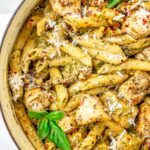
Chicken Pesto Pasta
Ingredients
- 1 pound boneless skinless chicken breasts, (cut into 1-inch pieces)
- 1 teaspoon Italian seasoning
- Kosher salt
- Black pepper
- 8 ounces penne pasta, (preferably with ridges)
- 2 tablespoons extra virgin olive oil
- 1/2 cup heavy cream
- 1/4 cup parmesan cheese, (plus more for serving if you like)
- 1/4 cup sun dried tomatoes, (drained if packed in oil)
- 1/2 cup basil pesto, (homemade or quality store-bought, plus more if you like)
- 1/2 to 1 teaspoon red pepper flakes
- Handful of torn basil leaves, (for garnish)
Instructions
- Season the chicken. Add the chicken to a bowl and season with the Italian seasoning and a big pinch each of kosher salt and black pepper. Toss to coat.
- Cook the pasta. Bring a medium pot of water to a boil and salt it well with about 1 tablespoon of salt. Drop the pasta in the boiling water and cook until al dente according to package instructions (about 8 to 9 minutes).
- Cook the chicken. While the pasta is cooking, add the olive oil to a large non-stick skillet and heat over medium-high. Add the chicken and cook, tossing occasionally, until golden brown on the outside and cooked through, about 7 to 8 minutes.
- Drain the pasta. When the pasta is ready, reserve about 1 cup of the cooking water and drain.
- Combine. To the pan with the chicken, lower the heat and stir in the cooked pasta, heavy cream, parmesan, and sundried tomatoes. Stir until everything is well combined. If it looks a bit dry, add a splash of the pasta cooking water (a couple tablespoons at a time) until the pasta is glossy and coated in the creamy sauce.
- Add the pesto. Turn off the heat and take the pan off the burner. Stir in the basil pesto and finish with a sprinkle of grated parmesan, red pepper flakes, and basil leaves. Serve.
Notes
- For perfectly cooked chicken, look for golden-brown edges and an internal temperature of 165°F. This ensures it's juicy and safe to eat.
- To prevent your sauce from breaking, always remove the pan from heat before adding the pesto. This keeps the flavors fresh and vibrant without overheating the sauce.
- If you're out of sun-dried tomatoes, you can easily substitute with halved cherry tomatoes for a fresh burst of flavor.
- Leftovers can be stored in an airtight container in the fridge for up to 4 days. Reheat gently on the stovetop with a splash of water or broth to maintain creaminess.
- For a quick weeknight meal, consider cooking extra chicken and pasta in advance. They can be stored separately in the fridge and combined with the sauce when you're ready to eat.

