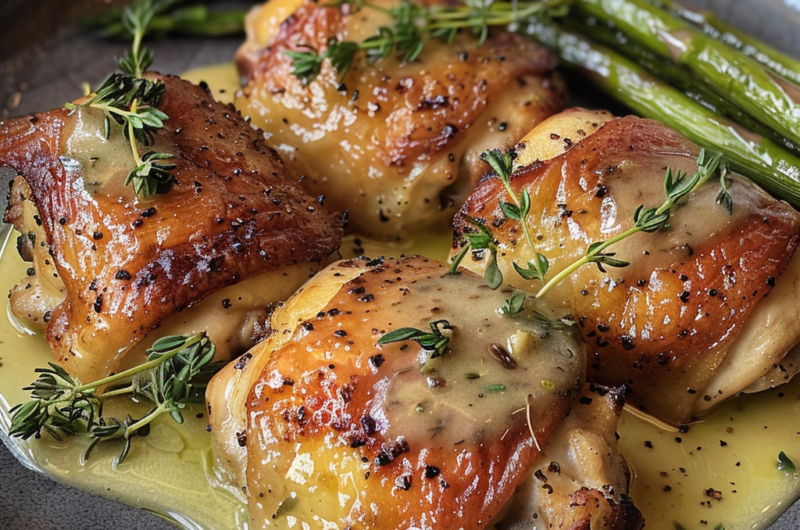
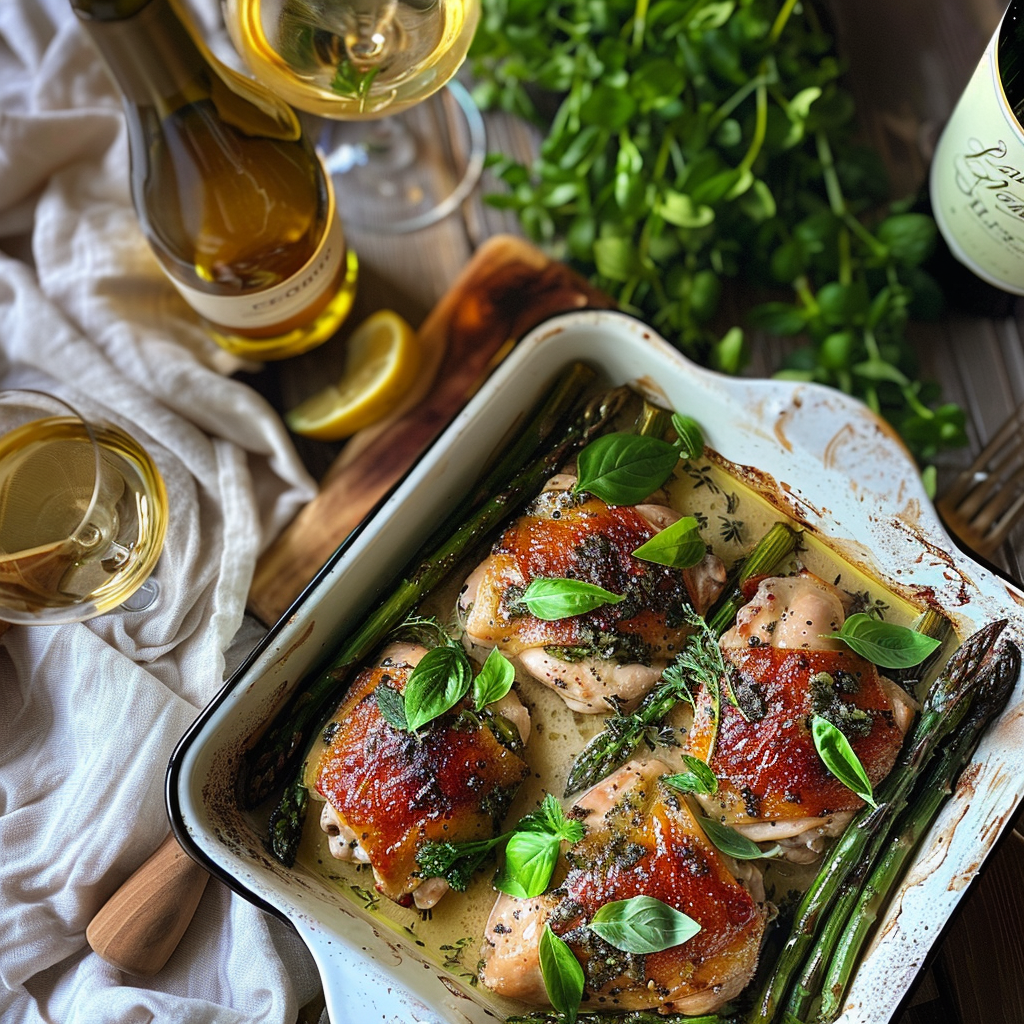
Golden, crispy-skinned chicken thighs roasted alongside tender asparagus in a velvety lemon-herb cream sauce — all on one pan, ready in 45 minutes.
📋 In This Article
Introduction
Let’s be honest: weeknight dinners usually fall into two camps. The “I threw frozen stuff on a tray” camp (functional, but joyless) or the “I dirtyied every pan in my kitchen” camp (delicious, but exhausting). This Sheet Pan Lemon Herb Creamy Chicken Thighs with Roasted Asparagus sits squarely in the sweet spot between them. You get the kind of meal that tastes like you spent hours babysitting a stove, but the oven does the heavy lifting. The chicken thighs render their fat into the cream sauce, creating a self-basting situation that keeps the meat incredibly juicy while the asparagus soaks up all that herb-flecked goodness. Fat, acid, and heat. That’s the whole game.
Why This Recipe Works
Sheet pan recipes are everywhere, but most of them suffer from the same fatal flaw: everything cooks at different rates, so your asparagus turns to mush before your chicken is safe to eat. This recipe solves that with a two-stage roasting method. You start the chicken alone at 425°F (220°C), giving the skin time to render and crisp. Then you add the asparagus and pour over the cream sauce. The high heat reduces the cream into a velvety coating while the asparagus roasts to tender-crisp perfection.
The real magic happens through fat rendering. As the chicken thighs cook, the subcutaneous fat melts into the pan, mingling with the cream and lemon juice. This creates a built-in basting liquid that keeps the meat moist without you having to do a thing. The Maillard reaction — that beautiful browning that happens when proteins and sugars meet high heat — gives the skin a deep golden color and hundreds of new flavor compounds you simply can’t get from stovetop cooking.
Ingredients
For the Chicken
- 4 bone-in, skin-on chicken thighs (about 2 pounds): The skin is non-negotiable here. It provides the fat that flavors everything else. Boneless, skinless thighs will work, but you’ll need to add extra olive oil to compensate.
- 1 tablespoon fresh thyme leaves: Stripped from the stems. Dried thyme works in a pinch (use 1 teaspoon), but fresh gives a brighter, cleaner flavor.
- 1 teaspoon kosher salt: Weigh your salt if you can — different brands vary wildly in density by volume.
- ½ teaspoon black pepper: Freshly cracked, always.
For the Asparagus
- 1 pound asparagus: Look for stalks that are roughly the same thickness so they cook evenly. Thick asparagus actually roasts better than pencil-thin spears, which can overcook in seconds.
- 1 tablespoon olive oil: A thin coating ensures browning without greasiness.
For the Lemon Herb Cream Sauce
- 1 cup heavy cream: The fat content matters. Heavy cream (36-40% fat) will reduce into a luscious coating; half-and-half will break and curdle at high heat.
- 2 tablespoons unsalted butter: Added to the sauce for richness and to help emulsify the mixture.
- 3 cloves garlic: Minced fine so they melt into the sauce rather than staying as distinct chunks.
- 1 lemon: You’ll use both the zest and the juice. The zest contains the aromatic oils; the juice provides the acid that cuts through the cream.
- 1 tablespoon fresh parsley: Chopped, for finishing. Add it at the end so it stays bright green.
- ½ cup chicken broth: Helps thin the sauce initially so it doesn’t seize up in the oven’s heat.
- 2 tablespoons Parmesan cheese (optional): Grated finely. It dissolves into the sauce, adding umami and helping it cling to the asparagus.
Step-by-Step Instructions
Step 1: Dry the Chicken for Crispy Skin
Preheat your oven to 425°F (220°C). This is the temperature sweet spot where the skin can crisp without burning before the interior cooks through.
Take your chicken thighs out of the packaging and set them on a plate. Now here’s the step most people skip: pat them absolutely dry with paper towels. I mean really get in there — both sides, especially the skin side. Any surface moisture turns to steam in the oven, and steam is the enemy of crispy skin. The Maillard reaction (the chemical process that creates browning and deep flavor) can’t happen until surface water evaporates. I used to rush this step — don’t. Thirty seconds of extra blotting makes a noticeable difference.
Step 2: Season Aggressively
Place the dried chicken on one side of a large sheet pan, skin-side up. Sprinkle the thyme, salt, and pepper evenly over both sides. Don’t be shy — most home cooks under-season by about 50%. The fat in the chicken skin will carry the flavor throughout the meat during cooking.
Step 3: Start the Chicken Alone
Slide the pan into the oven and set a timer for 20 minutes. This head start is crucial. Chicken thighs need more time than asparagus, and starting them together guarantees either undercooked chicken or overcooked vegetables. During this stage, the fat under the skin begins to render (melt) and pool in the pan, creating a flavorful base for the sauce.
Step 4: Prep the Asparagus
While the chicken works, trim the woody ends from your asparagus. The easiest method: hold each spear at both ends and snap — it naturally breaks where the tough part meets the tender stalk. Discard the ends. Toss the spears with olive oil and a pinch of salt in a bowl.
Step 5: Make the Cream Sauce
In a small saucepan over medium heat, melt the butter. Add the garlic and cook for about 30 seconds until fragrant — don’t let it brown or it turns bitter. Pour in the heavy cream, chicken broth, lemon zest, and lemon juice. Stir to combine and let it simmer for 2-3 minutes until slightly thickened. The sauce should coat the back of a spoon. Remove from heat.
Step 6: Add the Asparagus and Sauce
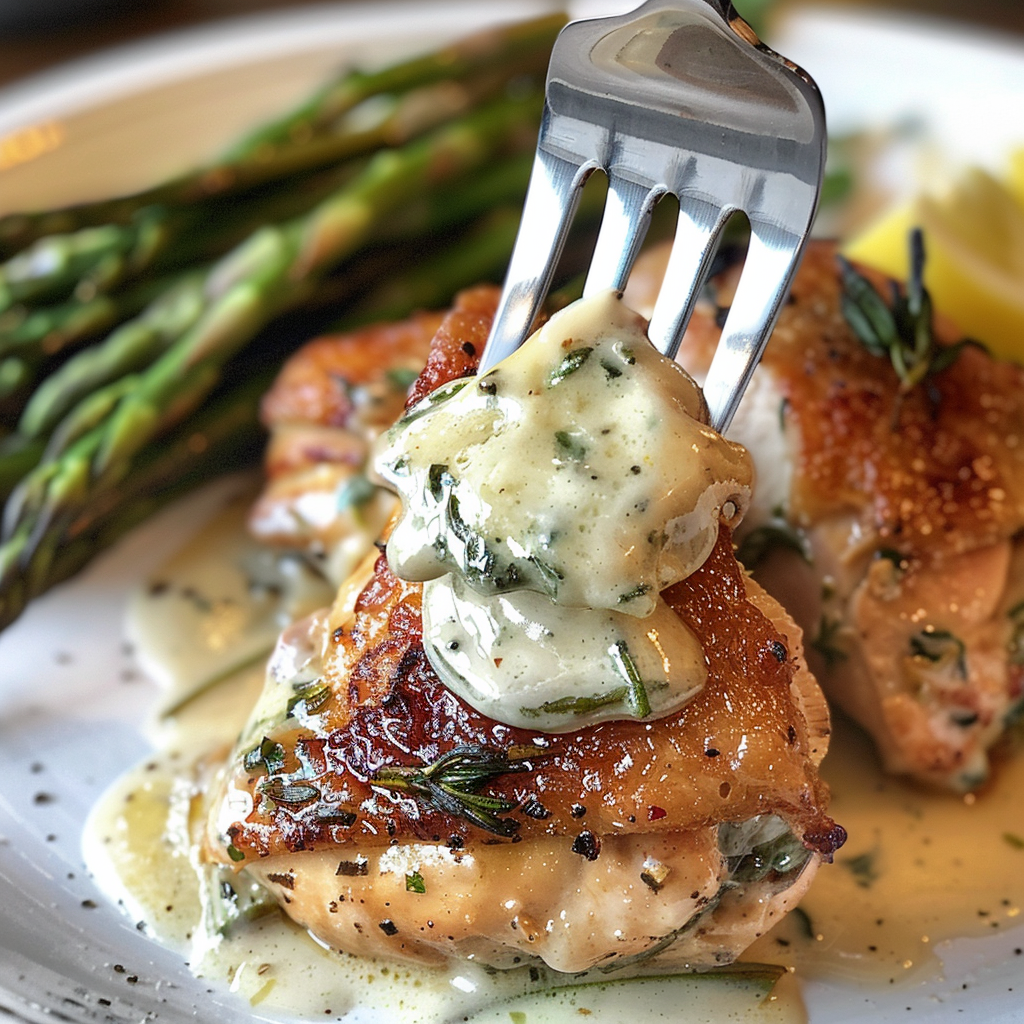
After 20 minutes, pull the pan out. The chicken skin should be starting to brown and you’ll see rendered fat pooling around it. Arrange the asparagus on the empty side of the pan. Pour the cream sauce over everything — yes, over the chicken too. The sauce will bubble and reduce in the oven’s heat, creating concentrated flavor.
Step 7: Finish Roasting
Return the pan to the oven for another 10-15 minutes. You’re looking for two things: the chicken should register 165°F (74°C) in the thickest part (use an instant-read thermometer — guessing is how chicken ends up dry), and the asparagus should be tender when pierced with a knife.
Here’s the thing about carryover cooking: the chicken will rise another 5-10 degrees after you pull it from the oven. If you wait until it hits 165°F in the oven, it’ll be 175°F by the time you serve it. I pull mine at 160°F and let it rest. The residual heat finishes the job.
Step 8: Rest and Serve
Let the pan rest for 5 minutes before serving. This matters more than you think. When meat cooks, the juices are pushed toward the center. Resting allows those juices to redistribute throughout the muscle fibers. Cut too early and you lose that moisture onto the cutting board. Sprinkle with fresh parsley and serve directly from the pan.
💡 Pro Tips for Success
Give everything space. Overcrowding is the most common mistake with sheet pan recipes. When ingredients are packed too tightly, moisture gets trapped and creates steam. Steam = soggy. Your chicken should have at least an inch between pieces, and the asparagus should be in a single layer. If your sheet pan looks crowded, use two pans or cook in batches.
Room temperature chicken cooks more evenly. Pull the thighs from the fridge 20-30 minutes before cooking. Cold chicken hits the oven and the exterior overcooks while the center struggles to come up to temperature. Room-temp meat cooks more predictably. The first time I skipped this step, the outside was golden but the meat near the bone was still pink — lesson learned.
Zest before you juice. It sounds obvious, but it’s surprisingly difficult to zest a lemon after you’ve squeezed all the juice out. Do the zest first, then cut and juice.
Heavy cream matters. I tested this with half-and-half, whole milk, and heavy cream side by side. The heavy cream reduced into a velvety coating that clung to the asparagus. The half-and-half broke into curdles. The whole milk never thickened. Use the real thing — this isn’t the place to cut calories.
Serving Suggestions
This dish is substantial enough to stand alone, but a few additions can round it out. Crusty bread is the obvious choice — you’ll want something to swipe through that cream sauce. A simple green salad with a sharp vinaigrette cuts the richness. For something heartier, basmati rice or roasted potatoes work beautifully. The potatoes can even roast on the same pan if you start them with the chicken — just cut them into 1-inch pieces so they cook in the same timeframe.
⚠️ Common Mistakes to Avoid
Overcrowding the pan is the fastest route to disappointment. Steam builds, the skin stays pale, and everything ends up soggy. Use the largest sheet pan you have, or split the recipe between two pans.
Under-seasoning is more common than over-seasoning. The cream sauce dilutes the salt on the chicken, so be generous with your initial seasoning. Taste the cream sauce before pouring — it should seem slightly too salty, because it will mellow as it cooks.
Ignoring the asparagus thickness. Pencil-thin asparagus cooks in 5-8 minutes; thick stalks need 12-15. If you have a mix, add the thick ones first and the thin ones halfway through roasting.
Skipping the rest period. Those 5 minutes of resting are when the sauce thickens slightly and the chicken reabsorbs its juices. Serve immediately after resting and you’ll notice the difference.
Variations & Dietary Adaptations
Dairy-free version: Substitute coconut cream for heavy cream. It adds a subtle coconut flavor that actually works beautifully with the lemon and herbs. Use olive oil instead of butter for sautéing the garlic.
Keto-friendly: This recipe is already very low-carb. To make it strictly keto, skip any optional Parmesan and double-check your chicken broth doesn’t contain added sugars.
Different vegetables: Broccoli florets, trimmed green beans, or bell pepper strips all work well. Add them with the asparagus in step 6. Root vegetables like carrots need more time — add them with the chicken in step 3.
Chicken breast option: You can substitute bone-in, skin-on chicken breasts, but increase the initial roasting time to 25-30 minutes. Boneless breasts cook faster (about 15-18 minutes total) but won’t develop the same crispy skin or render as much flavorful fat into the sauce.
Storage & Reheating
Store leftovers in an airtight container in the refrigerator for up to 3-4 days. The cream sauce may separate slightly when cold — that’s normal. It comes back together when reheated.
For reheating, the oven is your best bet. Preheat to 350°F (175°C) and warm the chicken and asparagus for 15-20 minutes until heated through. The microwave works in a pinch, but the chicken skin loses its crispness. If you’re meal-prepping, consider removing the skin before reheating — it won’t crisp up anyway, and the meat stays juicier.
Freezing isn’t recommended. Cream sauces tend to separate when frozen and thawed, creating an unpleasant grainy texture. This dish is best enjoyed fresh.
Frequently Asked Questions (FAQ)
+Why is my chicken skin not crispy?
The most common culprit is moisture. If you didn’t pat the chicken completely dry before seasoning, or if the pan was overcrowded, steam prevents proper browning. Also make sure your oven is fully preheated to 425°F — starting in a cooler oven gives the skin time to steam before it can crisp.
+Can I use chicken breasts instead of thighs?
You can, but the texture and flavor will be different. Thighs have more intramuscular fat, which keeps them juicy and contributes flavor to the sauce. Breasts are leaner and can dry out faster. If using breasts, stick with bone-in, skin-on for best results, and check for doneness at the 20-minute mark.
+How do I know when the chicken is done?
Use an instant-read thermometer inserted into the thickest part of the thigh, avoiding the bone. You’re looking for 165°F (74°C). If you don’t have a thermometer, the juices should run clear (not pink) when you cut into the thickest part, and the meat should feel firm, not squishy.
+Can I prep this ahead of time?
You can season the chicken and store it covered in the refrigerator for up to 24 hours before cooking. The cream sauce can be made a day ahead and reheated gently before pouring over the chicken. Don’t assemble the whole dish in advance — the asparagus will become soggy and the acid in the lemon will start to break down the chicken’s texture.
+What can I substitute for heavy cream?
Coconut cream works well and adds a subtle sweetness. For a lighter version, crème fraîche or full-fat Greek yogurt can work, but add them at the end of cooking rather than at the beginning — they can curdle at high heat if cooked too long.
+What sides go with this dish?
Crusty bread for sauce-dipping is classic. A simple arugula salad with lemon vinaigrette provides contrast. For a heartier meal, basmati rice, quinoa, or roasted baby potatoes all work well. Keep sides simple — this dish has enough going on.
Conclusion
This Sheet Pan Lemon Herb Creamy Chicken Thighs with Roasted Asparagus is the kind of recipe that makes weeknight cooking feel sustainable. It delivers on flavor without demanding your full attention at the stove. The two-stage cooking method ensures both components finish at the right time, and the self-basting cream sauce means the chicken stays juicy even if you slightly overcook it. Make it once and it’ll likely enter your regular rotation — the kind of reliable, satisfying meal you can throw together on autopilot while helping kids with homework or catching up on a podcast. That’s the sweet spot worth finding.
📌 Pin this Recipe for Later!