
Can Cats Eat Eggs?
Short answer: Yes, plain cooked eggs (scrambled or boiled, no salt or seasoning) are acceptable for cats in small amounts. Don’t feed raw eggs.
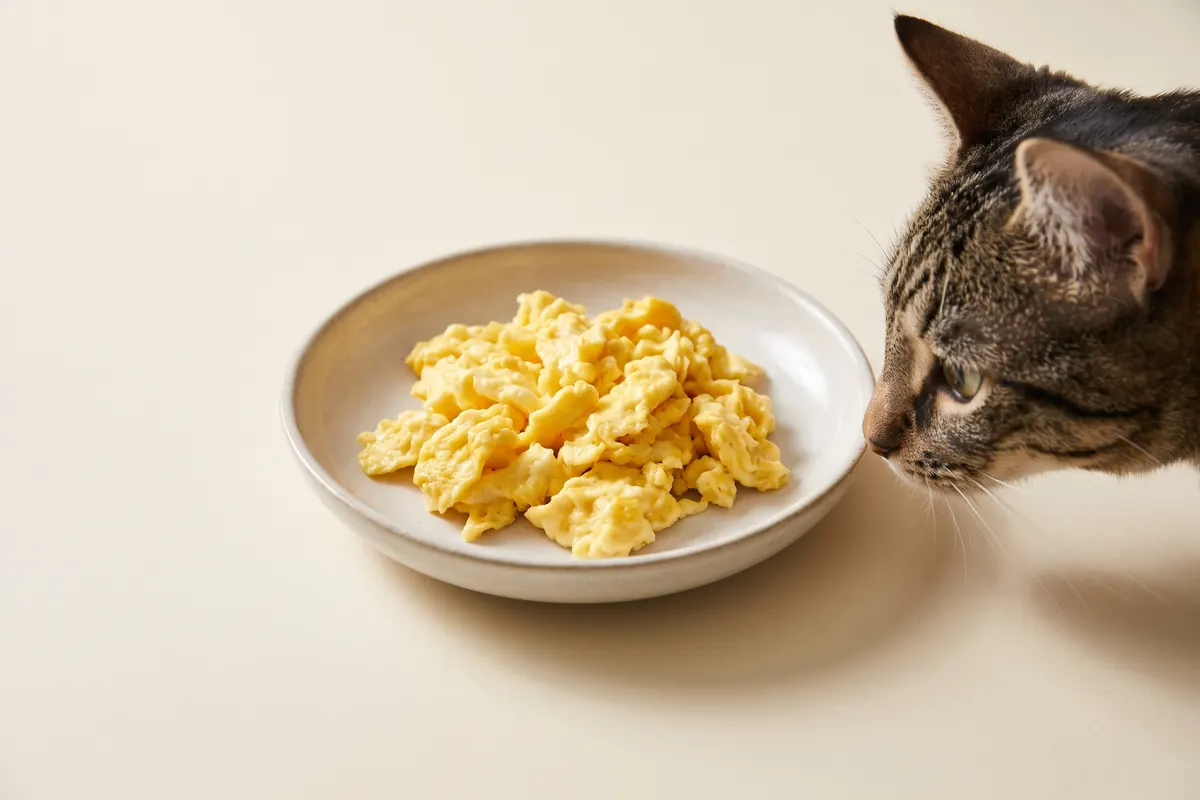
Why it’s okay
PetMD says eggs are a source of protein and fat, but shouldn’t be a cat’s only protein. Egg whites are nearly all protein and are the lower-risk option; yolks add fat and calories. Raw eggs raise the risk of Salmonella for both cats and people, so cook eggs to 160°F.
How much and how to serve it
About 1 tablespoon of cooked egg white on top of normal food can supplement protein. Check with your vet first.
Risks to watch for
- Raw eggs: Salmonella, vomiting and diarrhea.
- Yolks add fat and calories that can contribute to obesity.
- Fatty meals may cause stomach upset or pancreatitis.
What to do if your cat ate eggs
A little extra usually causes nothing worse than an upset stomach. If your cat ate a large amount, has vomiting or diarrhea, or seems unwell, call your vet.
Related foods
- Can cats eat cucumbers? 🟢 Yes, safe
- Can cats eat chicken? 🟡 Yes, in moderation
- Can cats eat turkey? 🟡 Yes, in moderation
FAQ
Can kittens eat eggs?
Small amounts of scrambled or boiled egg are okay, but eggs shouldn’t replace a complete kitten diet. Ask your vet first.
Can cats eat eggshells?
Shells contain calcium and minerals, but mineral supplementation should only be done under veterinary direction.
Search our full list of human foods and see whether they’re safe for your cat.
Browse all foods →Sources
By the Petybuzz Editorial Team · Last checked November 10, 2026. This page is general information for pet owners, not veterinary advice. Every cat is different: if yours has a medical condition, is on a special diet, or you’re unsure, ask your veterinarian.