Introduction
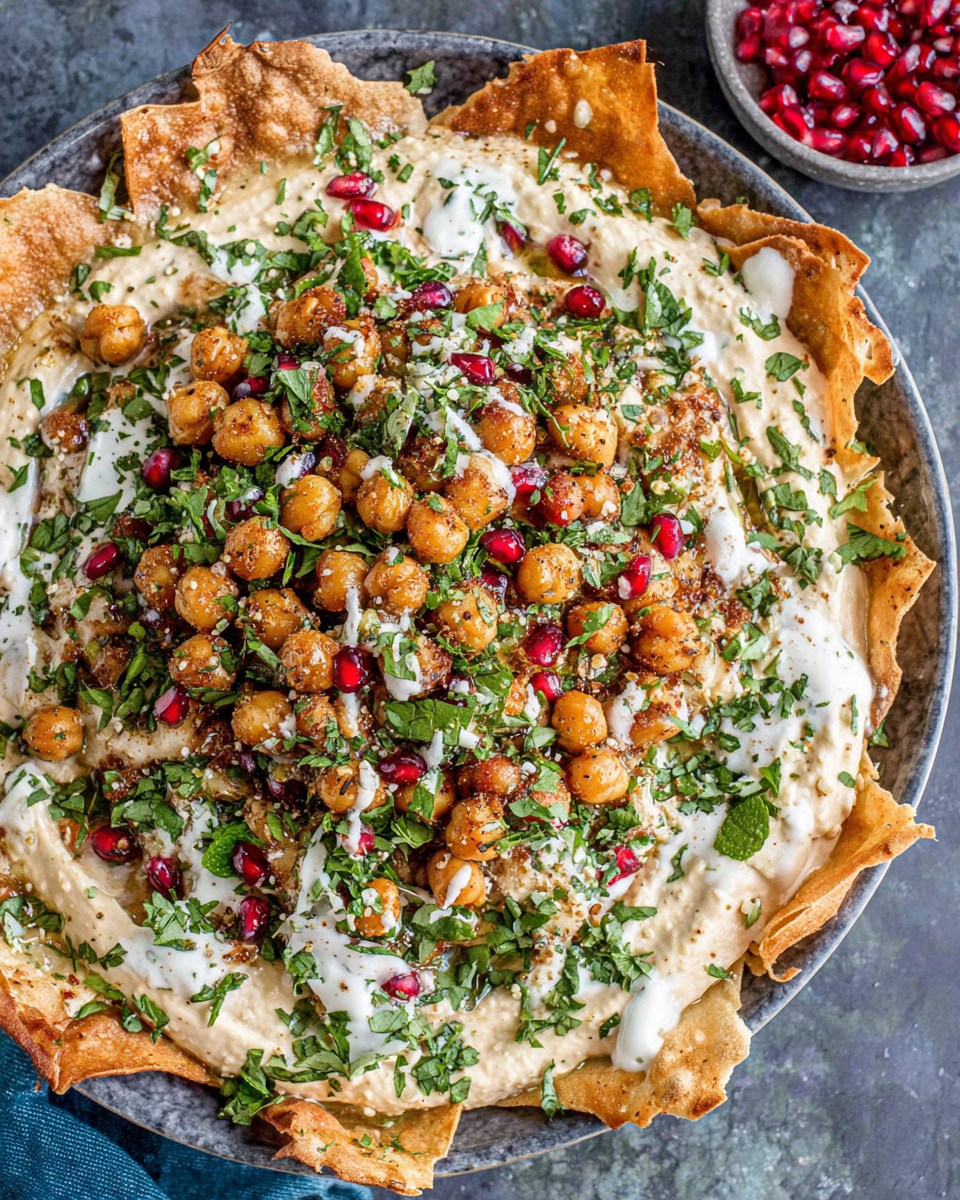
Fatteh is a festive Middle Eastern dish that brings layers of flavor and texture to the table. At its heart, it features crispy pita bread, creamy hummus, and a luscious yogurt topping. This dish is not only comforting but also an excellent way to showcase the versatility of basic ingredients.
Often served as a communal dish, fatteh can be customized to suit personal tastes, making it an enjoyable option for any home cook. With its warm spices and inviting aromas, fatteh is perfect for family gatherings or cozy dinners.
Ingredients
- 4 large pita breads
Pita breads form the crispy base for the dish. When toasted or baked, they provide a crunchy texture that contrasts beautifully with the creamy components. - 1 cup hummus
Hummus adds a rich, nutty flavor and smoothness to the dish. Made primarily from chickpeas, tahini, and olive oil, it serves as a hearty layer that enhances the overall taste profile. - 2 cups plain yogurt
Plain yogurt brings a tangy creaminess that balances the dish's flavors. It provides a cooling effect, which is particularly refreshing against the warm spices typical of fatteh. - 3 tablespoons olive oil
Olive oil is essential for drizzling over the dish, enriching it with healthy fats and depth of flavor. It lends a Mediterranean touch that complements the other ingredients. - 1 teaspoon ground cumin
Ground cumin contributes a warm, earthy aroma that is crucial for authentic Middle Eastern flavors. It enhances the richness of the hummus and yogurt. - 1 teaspoon paprika
Paprika adds a subtle sweetness and vibrant color to the dish. This spice also serves to deepen the overall flavor as the dish is layered. - Salt and pepper to taste
Salt and pepper are essential for seasoning. They help to bring out the natural flavors of each component and balance the overall dish. - Fresh parsley for garnish
Fresh parsley brightens the presentation and adds an herbaceous note to the dish. It's a lovely finishing touch that enhances both color and flavor.
Directions & Preparation
Step 1: Toast the pita bread until crispy.
Begin by preheating your oven to 375°F (190°C). Cut the pita bread into triangles and spread them out on a baking sheet. Toast them for about 10-15 minutes or until golden brown and crisp. This step is crucial, as the crunchy texture of the pita forms the base of the dish, creating a satisfying contrast with the creamy hummus and yogurt layers.
Step 2: Spread the hummus on a large serving plate.
Once the pita is toasted, layer the hummus generously over the crispy bread. Use the back of a spoon to create a smooth, even layer. The hummus serves as a flavorful foundation, and spreading it well ensures that each bite will carry that delightful nutty taste, essential for balancing the dish.
Step 3: Prepare the yogurt mixture.
In a bowl, combine the plain yogurt with ground cumin, paprika, salt, and pepper. Whisk until smooth and thoroughly blended. This step is important, as the seasoned yogurt will add a tangy creaminess that complements the flavors of the hummus and the spices, enhancing the overall experience of eating fatteh.
Step 4: Layer the yogurt over the hummus.
Carefully spoon the seasoned yogurt over the hummus layer, spreading it out evenly. This is a key step, as the yogurt not only adds creaminess but also provides a cooling contrast to the heat from spices, creating a sophisticated balance that makes fatteh so special.
Step 5: Drizzle olive oil over the layered dish.
Once the yogurt is in place, drizzle the olive oil generously on top. This step elevates the flavors, adding richness and depth. It’s also a wonderful way to enhance the visual appeal of your dish, making it shine with the glistening oil.
Step 6: Garnish with fresh parsley and paprika.
Finish your fatteh by sprinkling chopped fresh parsley and a pinch of paprika for added color. This garnish not only brightens the dish aesthetically but adds a fresh note that complements the creamy layers beautifully.
Step 7: Serve immediately and enjoy.
Fatteh is best enjoyed fresh, allowing the distinct textures and flavors to shine through. Serve it at room temperature or slightly warm, inviting your guests to dig in and savor every layer from the crispy pita to the creamy yogurt.

The Versatility of Fatteh: Customizing Your Dish
One of the delightful aspects of fatteh is its adaptability. You can easily customize it to suit different tastes or dietary preferences. Adding toppings like sautéed vegetables, chickpeas, or spiced meats can transform the dish from a simple appetizer to a hearty main course. This flexibility makes fatteh an exciting canvas for experimentation, inviting you to create your unique version.
Pairing Suggestions for Your Fatteh Experience
To amplify the enjoyment of fatteh, consider serving it alongside complementary dishes. Fresh tabbouleh or a robust fattoush salad introduces a refreshing crunch that contrasts well with the creamy layers of fatteh. Traditional pickled vegetables can also provide a welcome acidity, cutting through the richness and enhancing the overall meal experience.
Incorporating Seasonal Ingredients into Fatteh
Seasonality in cooking not only elevates flavors but also keeps your meals exciting. For instance, incorporating roasted seasonal vegetables into your fatteh can add warmth and depth, while fresh herbs like mint can introduce bright notes. Experimenting with seasonal ingredients allows for new interpretations of this classic dish, ensuring that it never feels stale or repetitive.
FAQs
Can I use store-bought hummus for this recipe?
Absolutely! Store-bought hummus can save time and still deliver great flavor, making it a convenient option.
What can I do if my yogurt mixture is too thick?
If your yogurt mixture is too thick, try adding a splash of water or milk to achieve a smoother consistency that spreads easily.
Can I add meat to my fatteh?
Yes! Shredded chicken or spiced lamb can enhance the dish and make it heartier, introducing rich flavors that deepen the experience.
What if I want a spicier fatteh?
To add more heat, sprinkle some cayenne pepper or drizzle with chili oil over the top right before serving for a kick that balances well with the creamy yogurt.
How can I prevent the pita from becoming soggy?
Serve the fatteh immediately after assembling to ensure the pita retains its crispness. If making ahead, keep components separate until ready to eat.
Is there a way to make this recipe vegan?
Yes! You can substitute yogurt with a plant-based yogurt and use a vegan recipe for hummus, ensuring all flavors shine through.
Conclusion
Fatteh is more than just a dish; it's an emblem of hospitality and communal eating in Middle Eastern culture. Its myriad flavors and textures come together to create a comforting and satisfying experience that everyone can enjoy.
Whether you choose to stick to traditional flavors or experiment with new ingredients, fatteh is a beautiful way to celebrate good food and great company.
Recipe Card

Classic Christmas Roast Turkey with Herb Butter and Gravy
Ingredients
- 1 whole turkey 12-14 pounds
- 1/2 cup unsalted butter softened
- 1/4 cup fresh parsley chopped
- 2 tablespoons fresh thyme chopped
- 2 tablespoons fresh rosemary chopped
- 2 teaspoons salt divided
- 1 teaspoon black pepper
- 4 cups low-sodium chicken broth
- 1 cup white wine
Instructions
- Preheat your oven to 325°F (165°C).
- Prepare the herb butter by mixing softened butter, parsley, thyme, rosemary, 1 teaspoon salt, and black pepper.
- Pat the turkey dry with paper towels and season the cavity with 1 teaspoon salt.
- Carefully loosen the skin over the breast and thighs and spread half of the herb butter underneath.
- Spread the remaining herb butter evenly over the skin of the turkey.
- Tie the legs together with kitchen twine and tuck the wings under the turkey.
- Place the turkey breast-side up on a roasting rack in a large roasting pan.
- Roast the turkey for approximately 3 to 3.5 hours, basting every 30 minutes with chicken broth.
- Check the internal temperature at the thickest part of the thigh, ensuring it reaches 165°F (74°C).
- Remove the turkey from the oven and let it rest for 20-30 minutes before carving.
- Prepare the gravy using drippings, chicken broth, and white wine.
Notes
Additional serving suggestions: pair with a crisp salad, garlic bread, or roasted seasonal vegetables for balance.
For make-ahead, prep components separately and assemble just before heating to preserve texture.
Taste and adjust with acid (lemon/vinegar) and salt right at the end to wake up flavors.