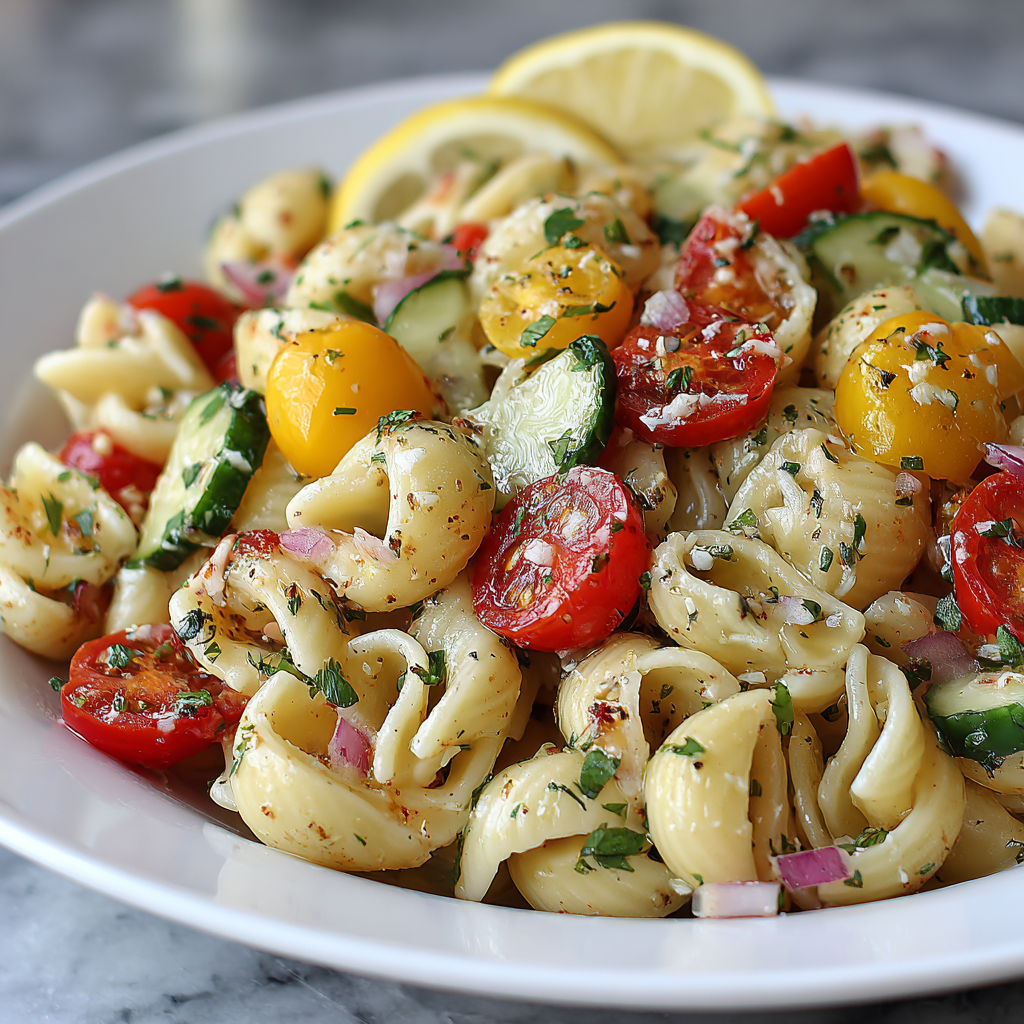
Introduction
Pasta salads are a staple for barbecues, potlucks, and quick weeknight dinners. Among the many variations, lemon tarragon pasta salad stands out as a refreshing option that combines the zestiness of lemon with the unique anise flavor of tarragon.
This dish not only offers a vibrant taste but also brings together textures and colors, making it visually appealing. Perfect served cold or at room temperature, it’s a versatile addition to any meal.
Ingredients
- 12 ounces pasta (farfalle or rotini)
The base of your salad is pasta, which provides structure and substance. Choosing shapes like farfalle or rotini allows the dressing to cling better, ensuring each bite is flavorful. - 1 cup cherry tomatoes, halved
Cherry tomatoes add a pop of color and sweetness to the salad. Their juicy texture enhances the overall freshness and contributes to a delightful burst of flavor. - 1 cup cucumber, diced
Cucumbers introduce a satisfying crunch and balance the acidity of the dressing. They also provide hydration, contributing to the salad's overall freshness and lightness. - 1/2 cup red onion, finely chopped
Red onion delivers a mild yet sharp flavor that can enliven the pasta salad. When finely chopped, it releases its essential oils without overwhelming the dish. - 1/4 cup fresh tarragon, chopped
Tarragon is the star herb in this salad, imparting a distinct flavor reminiscent of anise. Its aromatic profile pairs beautifully with the lemon, creating a fragrant and flavorful blend. - 1/2 cup olive oil
Olive oil serves as the primary binding agent in the dressing, adding richness and ensuring that the salad is well-coated. It also helps carry the flavors of the herbs and lemon throughout the dish. - 1/4 cup lemon juice (freshly squeezed)
Fresh lemon juice provides acidity that brightens the dish, balancing the flavors and enhancing the freshness of the other ingredients. It also helps to bring out the herbal notes of the tarragon. - Salt and pepper to taste
Seasoning is crucial for elevating the flavors in any dish. Salt enhances natural tastes, while pepper adds a subtle warmth and depth that can round out the flavor profile.
Directions & Preparation
Step 1: Cook the Pasta
Begin by bringing a large pot of salted water to a rolling boil. Add the pasta and cook according to package instructions until al dente. This step is essential as it ensures the pasta maintains a firmer texture, which will hold up well in the salad. Be careful not to overcook, as mushy pasta can lead to a less appealing dish.
Step 2: Prepare the Vegetables
While the pasta is cooking, wash and chop the cherry tomatoes, cucumber, and red onion. This preparation is key for ensuring that all veggies are cut consistently, which promotes even distribution of flavors and textures in the final salad.
Step 3: Make the Dressing
In a small bowl, whisk together the olive oil, lemon juice, salt, and pepper until emulsified. This step is vital for creating a cohesive dressing that will evenly coat the pasta and vegetables. Taste the dressing as you go to adjust the seasoning to your liking.
Step 4: Combine Ingredients
Once the pasta is cooked and cooled, combine it with the chopped vegetables and tarragon in a large bowl. Mixing everything at this stage ensures that the flavors mingle and that the dressing will reach every ingredient, providing a balanced taste throughout the salad.
Step 5: Add Dressing
Pour the dressing over the assembled pasta and vegetable mixture. Toss gently to combine, ensuring everything is well-coated. Properly mixing the ingredients is critical to achieving a harmonious flavor profile, and it prevents any ingredients from being left untouched by the dressing.
Step 6: Chill and Serve
Cover the salad and let it chill in the refrigerator for at least 30 minutes before serving. Chilling allows the flavors to meld and intensify, resulting in a more complex and enjoyable dish. Serve cold or at room temperature for the best experience.

Fresh Herbs Make a Difference
Using fresh herbs, particularly tarragon, can elevate your pasta salad from ordinary to extraordinary. The unique flavor profile of tarragon provides a subtle floral note that complements the zesty lemon and counters the sweetness of the vegetables. Always opt for fresh over dried for the best outcome.
Balancing Flavors
Achieving a balance of flavors is essential in a pasta salad. The acidity from the lemon juice, the richness of the olive oil, and the freshness of the vegetables all play critical roles. Adjusting the ratios and tasting along the way can help you find the perfect harmony that suits your palate.
Experimenting with Variations
While this lemon tarragon pasta salad shines on its own, don’t hesitate to experiment with additional ingredients. Consider adding proteins like grilled chicken or chickpeas for a heartier option, or incorporate other vegetables like bell peppers or spinach to customize the salad to your tastes.
FAQs
What if my pasta is overcooked?
If the pasta is overcooked, the texture will be mushy, affecting the salad's overall quality. To salvage it, you can try mixing in a little extra olive oil and serving it immediately to mask the texture somewhat.
Can I use a different herb instead of tarragon?
Yes, you can substitute basil or dill for tarragon. Each herb brings a different flavor; basil will increase the sweetness while dill will provide a more pungent bite. Adjust the amounts to your taste preference.
How can I enhance the flavor if it tastes bland?
If the salad tastes bland, try adding more salt, lemon juice, or a pinch of red pepper flakes for heat. Sometimes, a higher acid balance can elevate the overall flavor dramatically.
Is there a secret to keeping the pasta from sticking together?
To prevent sticking, make sure to rinse the pasta under cold water after draining to stop the cooking process and remove excess starch that can cause clumping.
What can I do if I add too much dressing?
If the salad is too dressed, try adding a little more pasta or vegetables to absorb the excess. Be cautious about undersalting the added ingredients so that the flavors remain balanced.
Can I add cheese to this salad?
Absolutely! A sprinkle of feta or goat cheese can add a creamy texture and a tangy flavor that complements the salad beautifully. Just be mindful of the additional saltiness they bring.
Conclusion
Lemon tarragon pasta salad is a vibrant and refreshing dish that embodies the essence of summer flavors. It's simple to prepare yet complex in taste, making it perfect for any occasion.
Whether served as a side or a main dish, it’s sure to impress everyone at the table. Enjoying this salad is not just about nourishment; it’s an experience of color, taste, and enjoyment.
Recipe Card

Bright and Herby Lemon Tarragon Pasta Salad
Ingredients
- 12 ounces pasta farfalle or rotini
- 1 cup cherry tomatoes halved
- 1 cup cucumber diced
- 1/2 cup red onion finely chopped
- 1/4 cup fresh tarragon chopped
- 1/2 cup olive oil
- 1/4 cup lemon juice freshly squeezed
- Salt and pepper to taste
Instructions
- Cook the Pasta
- Prepare the Vegetables
- Make the Dressing
- Combine Ingredients
- Add Dressing
- Chill and Serve
Notes
Additional serving suggestions: pair with a crisp salad, garlic bread, or roasted seasonal vegetables for balance.
For make-ahead, prep components separately and assemble just before heating to preserve texture.
Taste and adjust with acid (lemon/vinegar) and salt right at the end to wake up flavors.