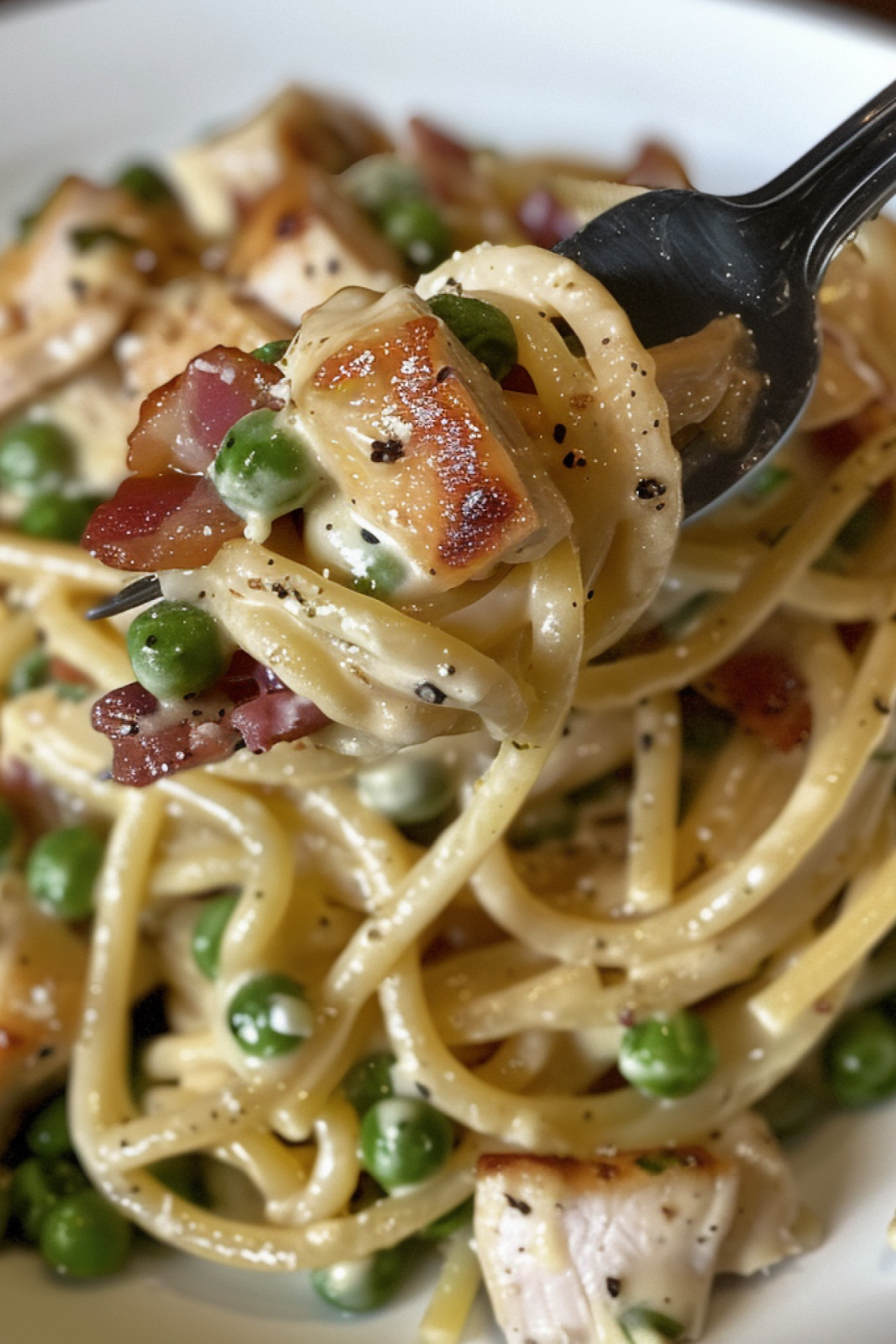
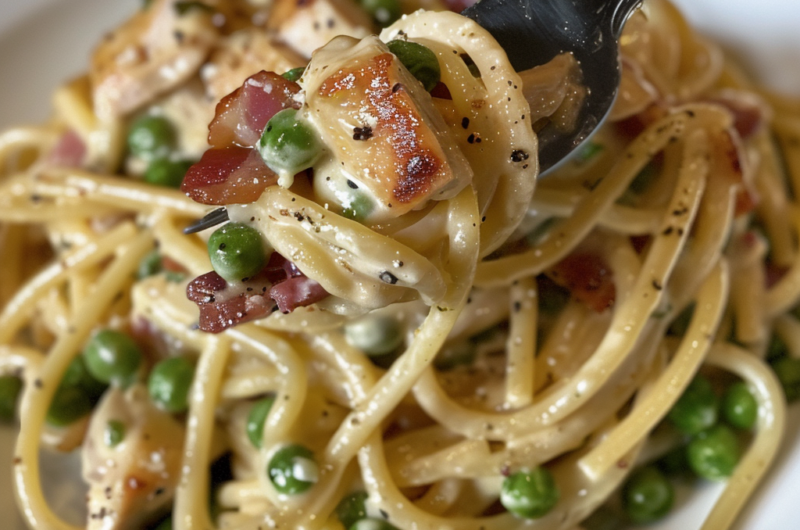
A rich, velvety twist on the classic Roman dish, loaded with smoky bacon and tender chicken for a family dinner that’s fast enough for a Tuesday.
📋 In This Article
- Introduction
- Why This Recipe Works: The 30-Minute Secret to Creamy Carbonara
- Ingredients for Your Quick & Delicious Carbonara
- Step-by-Step Instructions: Mastering Your Carbonara in Minutes
- Common Carbonara Mistakes to Avoid for Perfect Results
- Creative Variations: Customizing Your Chicken & Bacon Carbonara
- Storage & Reheating Tips for Leftover Carbonara
- Pro Tips for the Ultimate 30-Minute Carbonara Experience
- Frequently Asked Questions About Chicken & Bacon Carbonara
Introduction
Let’s be real: traditional carbonara is a high-wire act. It’s eggs, cheese, pasta water, and cured pork, all dancing on the edge of scrambling. It’s glorious when it works, but on a Tuesday night? It’s stress you don’t need. That’s why this 30-Minute Creamy Chicken & Bacon Carbonara Pasta with Peas is the weeknight warrior you’ve been looking for. By introducing a touch of heavy cream, we stabilize the sauce, making it forgiving enough for a novice cook but rich enough to satisfy a seasoned pro.
This isn’t just “pasta with white sauce.” It’s a strategic layering of flavors. We’re talking savory chicken seared in rendered bacon fat, sweet peas popping against salty Parmesan, and a silky sauce that clings to every strand of fettuccine. It bridges the gap between the authentic Roman original and the creamy comfort food we all crave when the clock is ticking.
Why This Recipe Works: The 30-Minute Secret to Creamy Carbonara
The genius of this dish lies in its hybrid technique. Authentic carbonara relies purely on the emulsification of egg yolk and starch water—a delicate balance. This version uses a “safety net” of heavy cream, which lowers the risk of the sauce breaking or turning into scrambled eggs.
Here is the food science behind why this works:
- Stabilized Emulsion: Heavy cream contains milk proteins and fat that help stabilize the egg yolks. This allows the sauce to withstand slightly higher temperatures without curdling, giving you a wider window of error.
- Starch is Key: We use the residual pasta water to bind the sauce. As pasta cooks, it releases starch into the water. When you toss this starchy liquid into the sauce, the starch granules swell and act as a thickener, creating that velvety texture that coats the back of a spoon.
- Flavor Layering: We cook the bacon first to render the fat. Then, we sear the chicken directly in that rendered fat. This is the Maillard reaction in action—browning the meat proteins to create hundreds of new flavor compounds. You aren’t just cooking chicken; you’re building a flavor base that store-bought sauces can’t touch.
Ingredients for Your Quick & Delicious Carbonara
Gather these ingredients before you start. Mise en place isn’t just for TV chefs; it’s the difference between a relaxed 30 minutes and a kitchen panic.
- 8 oz of fettuccine or spaghetti – Long noodles hold the creamy sauce best.
- 1 lb of chicken breast, cut into 1-inch pieces – Uniform sizing ensures even cooking.
- 4 strips of thick-cut bacon, chopped – You want the meaty kind, not paper-thin slices that disappear.
- 1 cup of frozen peas – No need to thaw; the residual heat warms them instantly.
- 1 cup of heavy cream – The stabilizer for our sauce.
- 2 large egg yolks – Adds richness and traditional carbonara texture.
- 3/4 cup of freshly grated Parmesan cheese – Please, grate it yourself. Pre-shredded cheese is coated in cellulose (anti-caking powder) which prevents it from melting smoothly.
- 2 cloves of garlic, minced – Aromatic backbone.
- 2 tablespoons of olive oil – To ensure the bacon renders without sticking initially.
- Salt and black pepper to taste.
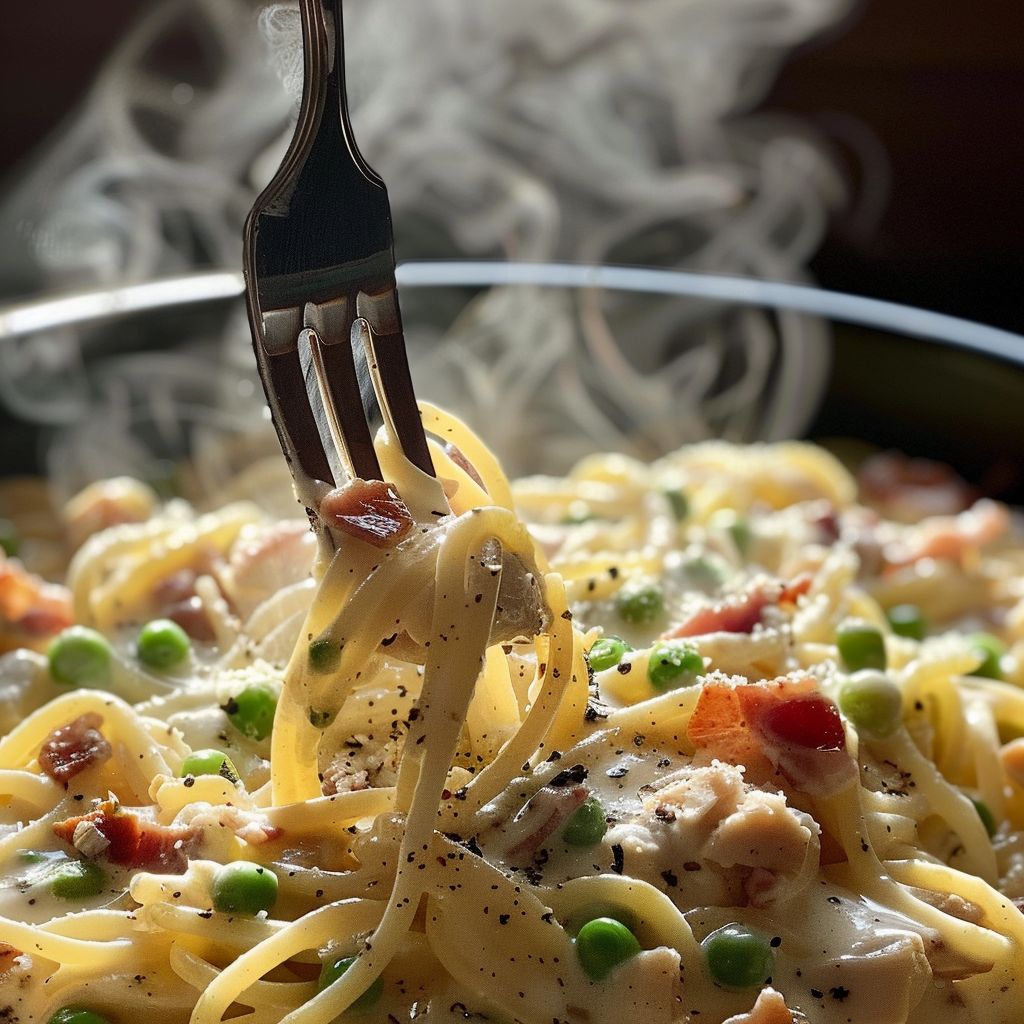
Step-by-Step Instructions: Mastering Your Carbonara in Minutes
Step-by-Step Instructions: Mastering Your Carbonara in Minutes
- Boil the Pasta: Bring a large pot of water to a boil. Salt it generously—it should taste like a seasoned soup, not the ocean (that’s a myth). Add the fettuccine and cook until just shy of al dente (about 1 minute less than package directions). Crucial: Before draining, reserve 1 cup of the starchy pasta water. This is liquid gold.
- Render the Bacon: While the water heats, add the chopped bacon and olive oil to a large, cold skillet. Turn the heat to medium. Starting cold allows the fat to render out slowly, leaving you with crispy bacon and a slick of hot fat in the pan. Cook until crispy (5-7 minutes), then remove bacon to a plate, leaving the fat behind.
- Sear the Chicken: Pat the chicken pieces dry and season with salt and pepper. Add them to the hot skillet with the bacon fat. Sear undisturbed for 3-4 minutes per side until golden brown and cooked through (internal temp of 165°F). Remove from heat.
- Build the Sauce Base: In the same skillet (off the heat to prevent burning), add the minced garlic and sauté for 30 seconds in the residual heat. Add the peas and the cooked bacon back to the pan.
- The Emulsification: In a bowl, whisk the egg yolks, heavy cream, and half the Parmesan cheese. Add the drained pasta to the skillet with the chicken and bacon. Turn the heat to very low. Pour the cream-egg mixture over the pasta. Toss vigorously. The residual heat from the pasta will cook the eggs gently into a sauce. If it looks too tight, add that reserved pasta water a splash at a time, tossing constantly, until you have a silky consistency.
- Serve: Remove from heat immediately. Stir in the remaining Parmesan and plenty of cracked black pepper. Serve hot.
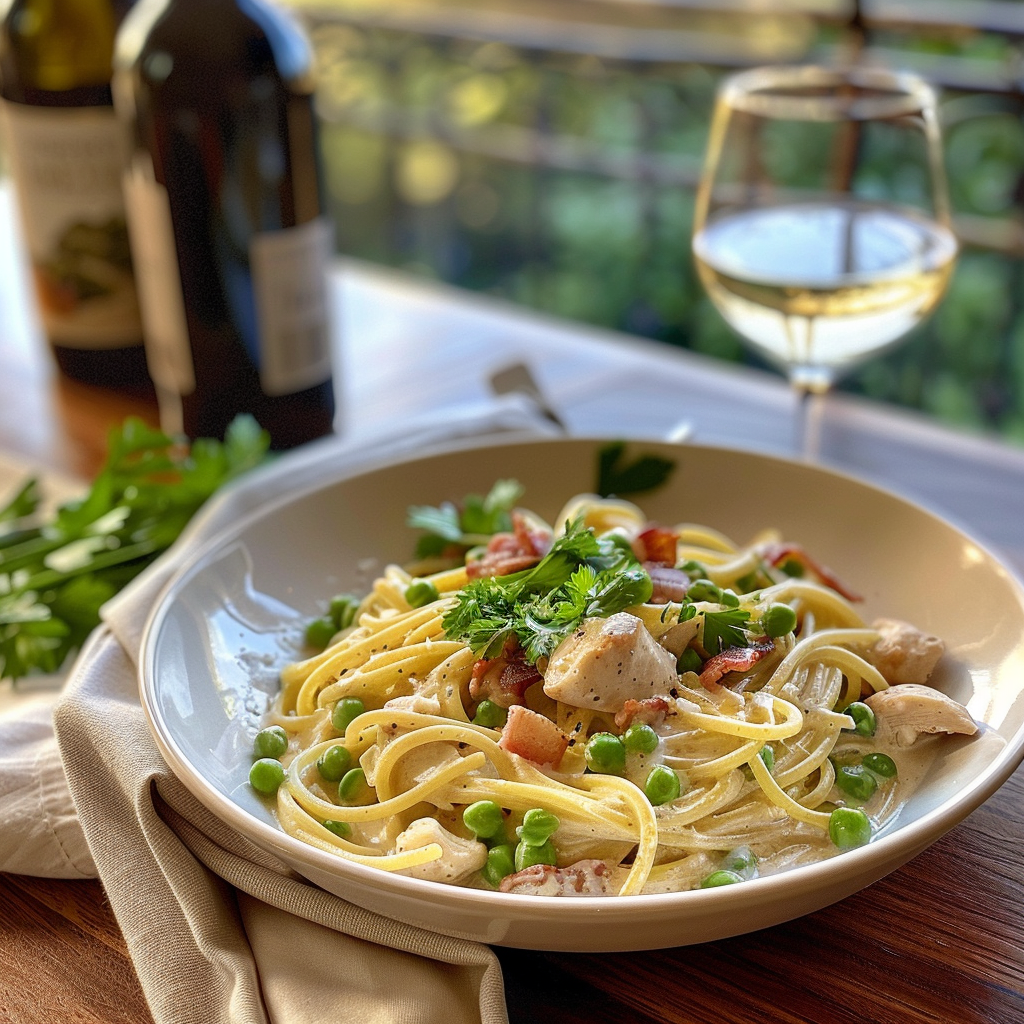
⚠️ Common Carbonara Mistakes to Avoid for Perfect Results
Even with a “cheat” sauce, things can go wrong. Here is how to dodge the bullets.
1. Scrambled Eggs: This is the number one fear. If you pour the egg mixture into a screaming hot pan, you get an omelet. The fix: Take the pan off the heat before adding the sauce. Let it cool for 30 seconds. Use the residual heat of the pasta, not the burner, to thicken the sauce.
2. Pre-Shredded Cheese: I mentioned it before, but it bears repeating. That bag of pre-shredded Parmesan has anti-caking agents that turn your sauce grainy and weirdly stretchy rather than smooth. Grate it yourself. It takes 45 seconds.
3. Overcooking the Pasta: Since the pasta finishes cooking in the sauce, it must be removed from the water while it still has a bite. If it’s fully cooked when it hits the pan, it will turn to mush by the time the sauce coats it.
Creative Variations: Customizing Your Chicken & Bacon Carbonara
This recipe is a template. Once you nail the technique, play with the variables.
- The “Authentic-ish” Route: Skip the heavy cream entirely. Use 3 whole eggs and 1 cup of Parmesan. You’ll need to be much more careful with the heat, whisking furiously with pasta water to create the emulsion, but the result is lighter.
- Spring Vegetable Swap: Not a fan of peas? Swap them for asparagus tips or thin slices of zucchini added in the last 2 minutes of sautéing.
- Spicy Kick: Add a teaspoon of red pepper flakes when you sauté the garlic. The heat cuts through the richness of the cream and bacon fat.
Storage & Reheating Tips for Leftover Carbonara
Carbonara is best eaten the moment it hits the plate. However, life happens. If you have leftovers, store them in an airtight container in the fridge for up to 3 days.
Reheating is where people ruin it. Do not nuke it on high power.
- Best Method: Place the cold pasta in a skillet over low heat. Add a splash of milk or water. Toss gently until warmed through. The liquid helps re-emulsify the sauce.
- Microwave: If you must, heat in 30-second bursts at 50% power, stirring in between.
💡 Pro Tips for the Ultimate 30-Minute Carbonara Experience
To take this from “good” to “I can’t believe I made this,” focus on the details.
Grate Your Cheese Fine: If you grate your Parmesan into large shreds, it won’t melt evenly into the sauce. Use the fine side of your box grater or a microplane. You want it to dissolve instantly upon contact with the hot pasta.
Reserve More Water Than You Need: I usually drain my pasta right over a mug or measuring cup. That catches the water automatically. I used to forget this step and end up with a dry pan—don’t be like me. That starchy water is the difference between a clumpy mess and a glossy, restaurant-quality sauce.
Pepper is a Flavor, Not Just Heat: In carbonara, black pepper is a primary ingredient, not a garnish. It provides a floral, pungent contrast to the salty pork and rich cheese. Be generous.
Frequently Asked Questions About Chicken & Bacon Carbonara
+Can I make this without heavy cream?
Yes. You can omit the heavy cream and rely solely on the eggs and pasta water for the sauce. However, you must work quickly and off-heat to prevent the eggs from scrambling. The cream makes the recipe “foolproof.”
+Why does my carbonara sauce separate?
Sauce separation usually happens because the heat was too high. The proteins in the egg yolks coagulate and squeeze out the fat, turning the sauce grainy. If this happens, you can sometimes save it by whisking in a tablespoon of cold pasta water or cream immediately to cool the mixture down.
+Can I use a different protein?
Absolutely. Bacon is traditional in American adaptations, but pancetta or guanciale are more authentic. If you don’t eat pork, turkey bacon works well, though you may need to add an extra tablespoon of olive oil to compensate for the lack of rendered pork fat.
+How do I know when the chicken is done?
The most accurate way is an instant-read thermometer inserted into the thickest piece; it should read 165°F. Visually, the meat should be opaque throughout with no pink, and the juices should run clear.
+Can I use a different type of pasta?
Yes. While long strands like fettuccine or spaghetti are traditional, short shapes like penne or rigatoni work great, especially for kids. They hold the sauce and peas well in their hollow centers.
📌 Pin this Recipe for Later!