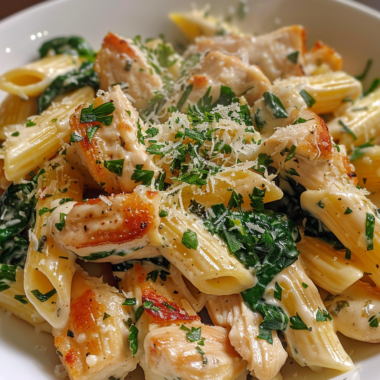
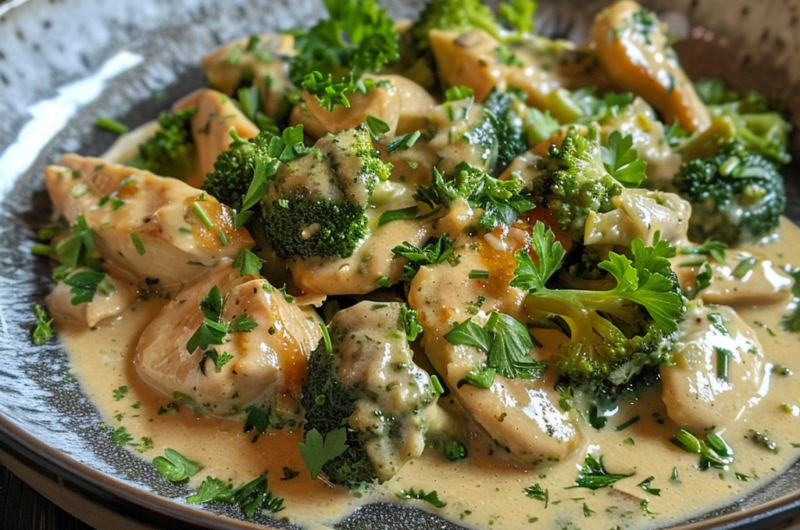
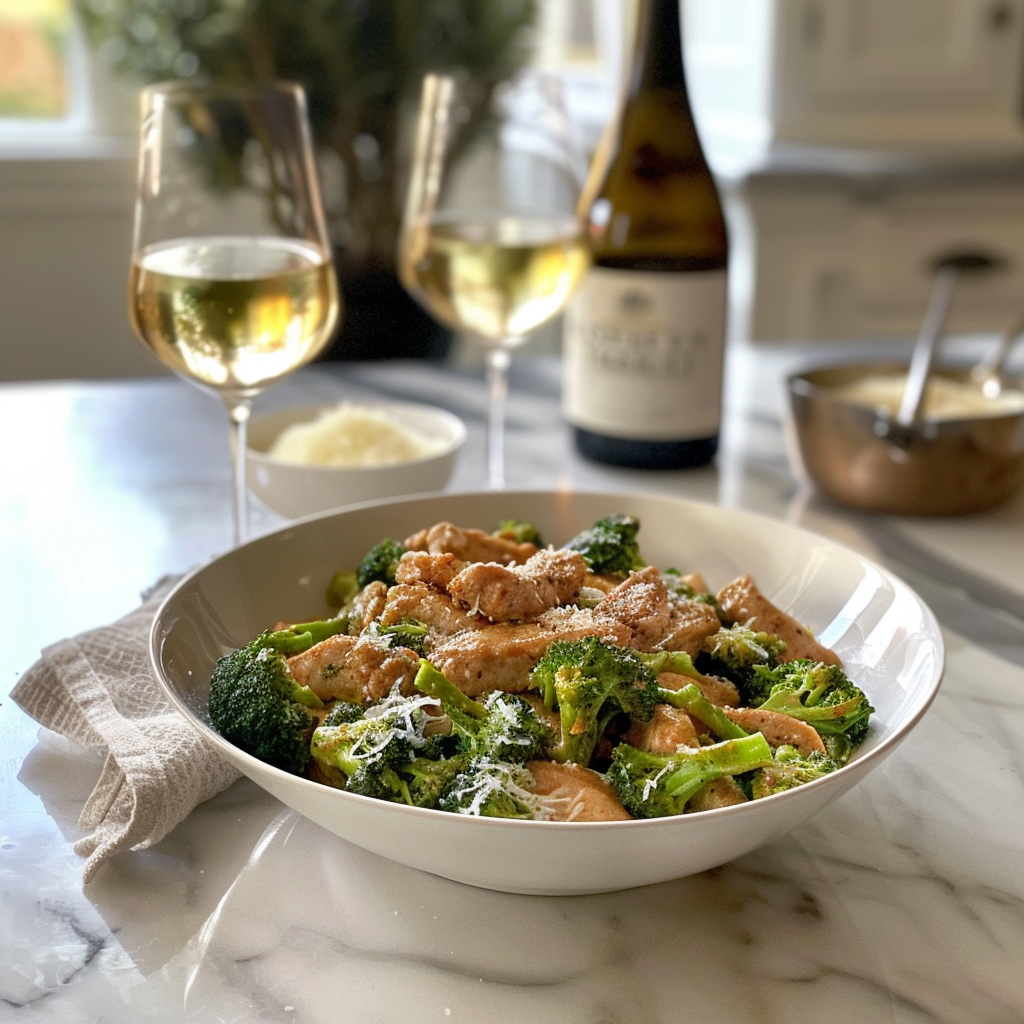
Golden-seared chicken and crisp-tender broccoli cloaked in a velvety, garlic-Parmesan cream sauce—this 30-minute meal is weeknight comfort food at its finest.
📋 In This Article
Introduction
Let’s be honest: weeknight cooking is a battlefield. You want something that feels like a hug in a bowl but doesn’t require a mountain of dishes or a culinary degree. That’s exactly why this Garlic Parmesan Chicken & Broccoli Stir-Fry with Creamy Sauce is on heavy rotation in my kitchen. It takes the high-heat urgency of a stir-fry and marries it with the comforting richness of an American cream sauce.
It sounds like a strange union, I know. Stir-fries usually imply soy sauce and ginger, not heavy cream and Parmesan. But the technique is sound. By using a wok or large skillet, we get the Maillard reaction on the chicken—deep browning that creates savory depth—while keeping the broccoli bright and snappy. Then, we dial back the heat to build a sauce that clings to every piece. It’s fast, it’s flexible, and it might just replace your standard takeout order.
Why This Recipe Works
Most creamy chicken and broccoli recipes rely on a simple simmer, which often results in rubbery chicken and gray, mushy broccoli. This recipe fixes that by treating the components differently before bringing them together.
First, we treat the wok like a high-heat engine. By searing the chicken in batches, we ensure proper caramelization rather than steaming the meat. This browning is critical for flavor development. Second, we manage the broccoli independently. A quick steam-sauté keeps the florets vibrant green and crisp-tender, offering a textural contrast to the soft sauce.
Finally, there’s the sauce. Cream and Parmesan are a classic duo, but they can be finicky. The key here is emulsification. By melting the cheese into the cream off high heat and using the starch from the chicken coating (and a little cornstarch slurry), we create a stable, velvety emulsion that won’t break or get greasy. It’s a hybrid technique that respects the ingredients.
Ingredients You’ll Need
For the Chicken and Vegetables
- 1 pound chicken breast: Boneless, skinless. Cut into uniform 1-inch pieces so they cook at the same rate. Thighs work too, but breasts are leaner.
- 4 cups broccoli florets: Cut them into bite-sized pieces. Fresh is best for texture; frozen tends to get waterlogged.
- 4 cloves garlic: Fresh is non-negotiable here. Minced fine so it melts into the sauce.
- 2 tablespoons olive oil: For high-heat searing.
- 1 teaspoon Italian seasoning: A dried blend that adds herbal notes without the fuss of chopping fresh herbs.
For the Creamy Parmesan Sauce
- 1 cup grated Parmesan cheese: Buy a wedge and grate it yourself. Pre-shredded cheese is coated in cellulose (anti-caking agents) that prevent it from melting smoothly, leading to a grainy sauce.
- 1/2 cup heavy cream: The fat content is crucial. Don’t sub half-and-half or the sauce won’t thicken properly.
- 1 cup chicken broth: Low sodium is best so you can control the salt level.
- 2 tablespoons butter: Unsalted, used to finish the sauce and add gloss.
- 1 tablespoon cornstarch: Mixed with water to create a slurry. This guarantees the sauce coats the food rather than running off.
- Salt and black pepper: To taste.
- Red pepper flakes (optional): If you like a little heat to cut the richness.
Step-by-Step Cooking Instructions
- Prep the Chicken: Cut the boneless, skinless chicken breasts into 1-inch cubes. Pat them aggressively dry with paper towels. Moisture is the enemy of browning; if the chicken is wet, it will steam. Season generously with salt, pepper, and half the Italian seasoning.
- Sear the Chicken: Heat a wok or large skillet over medium-high heat until it’s shimmering hot. Add the olive oil. Add the chicken in a single layer—do not crowd the pan or the temperature will drop and you’ll lose that golden crust. Cook for 3-4 minutes per side until deeply golden and cooked through. Remove the chicken and set it aside on a plate.
- Cook the Broccoli: Add the broccoli florets to the hot pan. Add a splash of water (about 2 tablespoons) and cover with a lid to steam for 2 minutes. Remove the lid and sauté for another 2 minutes until the broccoli is bright green and tender-crisp. Remove the broccoli and set aside with the chicken.
- Build the Sauce Base: Reduce the heat to medium. Add the butter and scrape up any browned bits (fond) stuck to the pan—this is pure flavor. Add the minced garlic and sauté for just 30 seconds. You want it fragrant, not brown or bitter.
- Create the Emulsion: Pour in the chicken broth and heavy cream. Whisk the mixture, scraping the bottom of the pan. Bring it to a gentle simmer. Whisk together the cornstarch with a tablespoon of cold water and pour it in. This is the moment the sauce transforms from thin liquid to a glossy coating consistency.
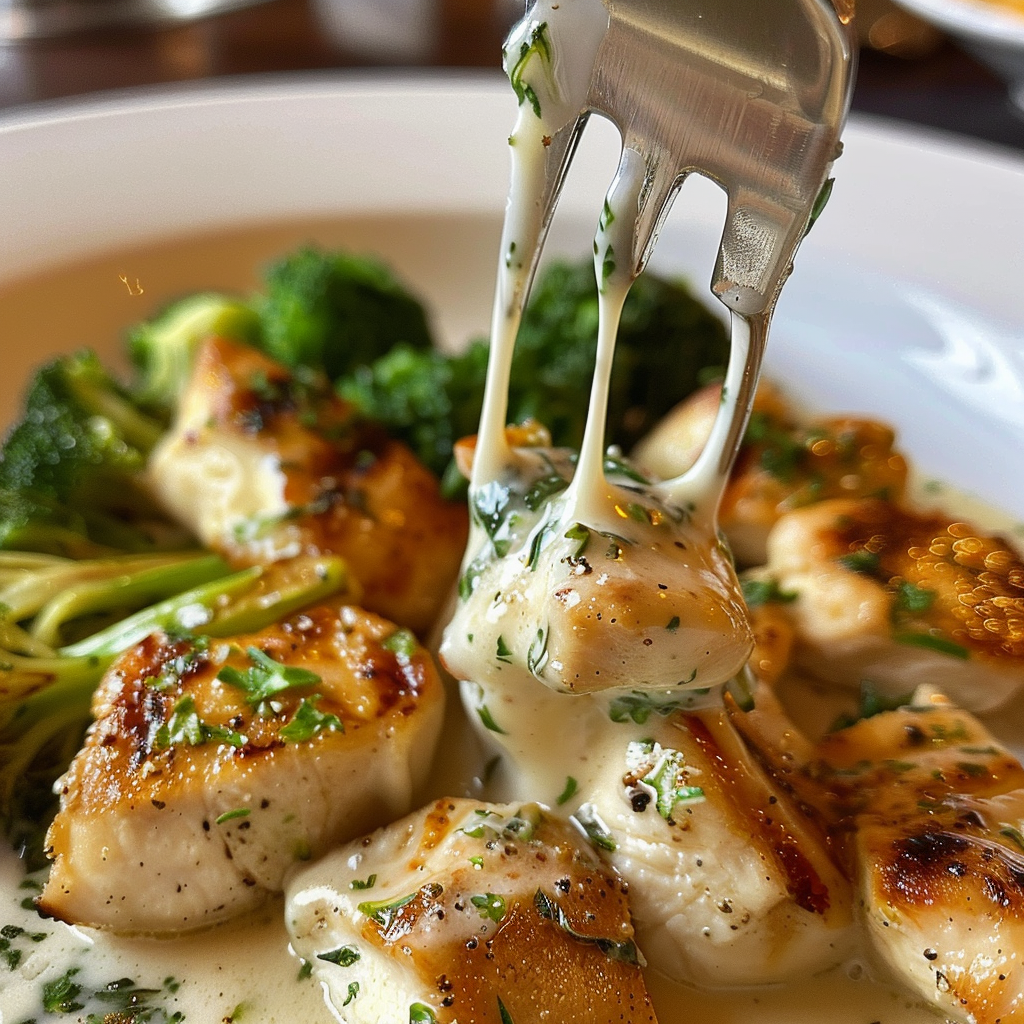
- Add the Cheese: Turn the heat down to low. Gradually stir in the grated Parmesan cheese a handful at a time. Stir constantly until melted and smooth. Crucial note: Do not let this boil. High heat causes the proteins in the cheese to tighten up, squeezing out fat and making the sauce grainy.
- Combine and Serve: Toss the cooked chicken and broccoli back into the pan. Stir to coat everything in that velvety sauce. Let it heat through for 1 minute. Taste and adjust seasoning—I almost always add an extra pinch of black pepper here. Serve immediately over pasta, rice, or zoodles.
⚠️ Common Mistakes to Avoid
Even a simple stir-fry can go wrong if you ignore the chemistry of the ingredients.
Crowding the Pan This is the most common error. When you dump all the chicken in at once, the temperature of the oil plummets. Instead of searing, the chicken boils in its own juices. The result? Gray, rubbery meat. Cook in batches if your pan is small. It takes an extra 3 minutes but makes a world of difference.
Using Pre-Shredded Cheese I used to think pre-shredded cheese was a time-saver. It’s not. It’s a texture killer. Those anti-caking powders prevent the cheese from melting into a cohesive sauce, leaving you with a gritty, oily mess. Grate your own Parmesan from a wedge. It melts into a silky, cohesive liquid because it lacks those additives.
Overcooking the Broccoli There is nothing sadder than olive-drab broccoli. It smells like sulfur and tastes like mush. Keep the heat high and the cooking time short. The broccoli should retain a slight crunch (al dente) to contrast with the soft chicken and creamy sauce. If you can stick a fork through it with zero resistance, it’s gone too far.
💡 Pro Tips for a Masterful Dish
Dry Chicken is Golden Chicken Before the chicken hits the pan, take 10 seconds to pat it dry with paper towels. Water on the surface of the protein turns to steam instantly upon contact with hot oil. Steam prevents the temperature from rising high enough for the Maillard reaction—that chemical process that creates the complex, savory flavors we associate with browned meat. Dry meat browns; wet meat steams.
The Cold Water Fix for Broken Sauce If your sauce looks curdled or greasy, don’t panic. The emulsion has likely split because the heat was too high. Take the pan off the heat immediately. Whisk in a tablespoon of very cold water or an ice cube. The temperature shock and vigorous agitation can often bring the sauce back together into a creamy state.
Season in Layers Don’t save all the salt for the end. Season the chicken before it hits the pan. Salt the water if you steam the broccoli. Taste the sauce before combining. Layering salt throughout the cooking process ensures the flavor is integrated, not just sitting on the surface.
Delicious Variations & Serving Suggestions
This recipe is a blueprint. Once you nail the technique, you can riff on it endlessly.
The Low-Cb Route Skip the pasta entirely. Serve this over zucchini noodles (zoodles) or spaghetti squash. The creamy sauce pairs beautifully with the slight crunch of the squash. You get a massive bowl of food that feels indulgent but fits perfectly into a keto or low-carb lifestyle.
Protein Swaps Chicken thighs are a great alternative if you prefer dark meat; they stay juicy even if slightly overcooked. For a seafood twist, large shrimp work incredibly well here—just reduce the searing time to 2 minutes per side so they don’t turn rubbery.
Spice It Up The Parmesan sauce is rich and savory, which acts as a perfect canvas for heat. Add a teaspoon of red pepper flakes along with the garlic, or stir in a dollop of Calabrian chili paste at the end. The acidity and heat cut right through the creaminess.
Storage & Reheating Tips
Cream sauces are notoriously finicky when reheated, but with the right technique, you can save the leftovers.
Refrigeration Store the stir-fry in an airtight container in the fridge for up to 3 days. Keep in mind that the broccoli will lose some of its crunch as it sits in the sauce, absorbing moisture.
Reheating (The Gentle Method) The microwave is the enemy of cream sauces—it creates hot spots that cause the sauce to separate. Instead, reheat in a skillet over medium-low heat. Add a splash of chicken broth or water to loosen the sauce. Stir gently and constantly until it’s just heated through.
Freezing I don’t recommend freezing this dish. Dairy-based sauces tend to separate and become grainy upon thawing, and the broccoli will turn to mush. It’s best enjoyed fresh.
Frequently Asked Questions (FAQ)
+Why is my cream sauce grainy?
A grainy sauce usually means the cheese proteins seized up. This happens if the heat is too high when you add the cheese or if you use pre-shredded cheese. Always add cheese off the heat or over very low heat, and grate it fresh from the block.
+Can I use milk instead of heavy cream?
You can, but the texture will be much thinner. Heavy cream has a high fat content (around 36-40%) which is necessary for a thick, velvety sauce. If you use milk, you’ll need to increase the cornstarch significantly, and it won’t have the same rich mouthfeel.
+How do I know when the chicken is fully cooked?
The most accurate way is to use an instant-read thermometer. Chicken is safe to eat at 165°F (74°C). Visually, the meat should be opaque all the way through with no pink centers, and the juices should run clear. If you cut into a piece and it’s still pink, put it back in the pan.
+Can I make this dish ahead of time?
You can prep the ingredients (chopping chicken and broccoli) up to a day in advance. However, I recommend cooking it fresh. The sauce is at its best right out of the pan, and the broccoli retains its texture better when not reheated.
+What sides go with this recipe?
Because the sauce is so rich, it pairs well with something neutral to soak it up. Egg noodles, white rice, or mashed potatoes are classic choices. For a lighter meal, a crisp green salad with a vinaigrette provides a nice acidic contrast to the creamy sauce.
+Can I use frozen broccoli?
Yes, but thaw it first and pat it very dry. Frozen broccoli has a higher water content than fresh, so if you throw it in the pan frozen, it will make the sauce watery and dilute the flavor. Soggy broccoli is a bummer, so take that extra step to dry it off.